
By Dr Alfred D’Silva
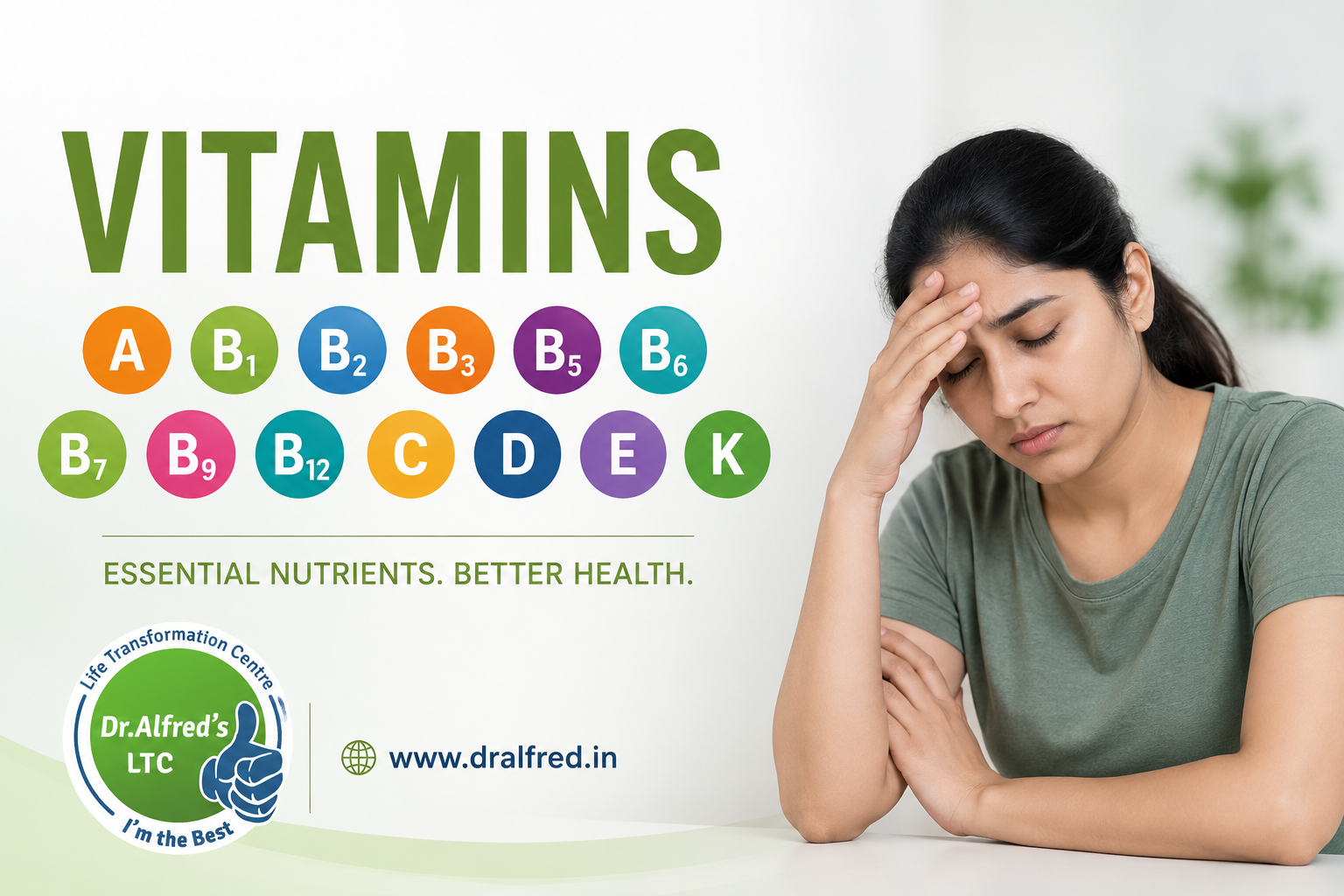
You may be eating enough food—but are you getting enough nutrition?
Modern life has created an interesting paradox. Food is available in abundance, yet nutritional inadequacy can still occur. Highly processed diets, restrictive eating patterns, poor dietary diversity, inadequate sunlight exposure, gastrointestinal disorders, certain medications, alcohol use, ageing and problems with nutrient absorption can all contribute.
A vitamin deficiency does not always announce itself dramatically.
Sometimes the first signs are surprisingly ordinary:
- Persistent tiredness
- Muscle weakness
- Poor concentration
- Tingling or numbness
- Mouth ulcers
- Cracks around the lips
- Changes in the skin or hair
- Bone or muscle discomfort
- Frequent illness
- Easy bruising
- Poor wound healing
- Changes in vision
- Low mood or irritability
But these symptoms are not proof of a vitamin deficiency. Many medical conditions can produce similar symptoms. Persistent or unexplained symptoms deserve proper clinical evaluation rather than indiscriminate supplementation.
What Exactly Are Vitamins?

Vitamins are organic micronutrients required in relatively small quantities for normal physiological functioning.
They do not provide calories like carbohydrates, fats and proteins, but they participate in processes that allow the body to use nutrients effectively.
They are involved in:
- Energy metabolism
- Nervous-system function
- Red-blood-cell formation
- DNA synthesis
- Vision
- Immunity
- Bone metabolism
- Blood clotting
- Antioxidant defence
- Growth and tissue repair
Vitamins are broadly divided into two groups.
Fat-soluble vitamins
A, D, E and K
These can be stored in the body to varying degrees. Consequently, excessive supplementation—particularly with vitamins A and D—can potentially cause toxicity.
Water-soluble vitamins
Vitamin C and the B-complex vitamins
These generally have more limited storage, although vitamin B12 is an important exception because substantial stores can be maintained in the liver.
Let’s examine the vitamins individually.

Vitamin A — Vision, Immunity and Tissue Health
Vitamin A plays an important role in vision, immune function, reproduction, growth and cellular differentiation.
Deficiency may cause:
- Difficulty seeing in dim light or night blindness
- Dryness of the eyes
- Increased susceptibility to infections
- Impaired growth in children
- In severe deficiency, damage to the cornea and vision
Good food sources:
- Liver
- Eggs
- Dairy products
- Fish
- Carrots
- Sweet potato
- Pumpkin
- Spinach
- Broccoli
- Dark-green leafy vegetables
- Orange and yellow vegetables
Animal foods provide preformed vitamin A, while many vegetables provide carotenoids such as beta-carotene that the body can convert to vitamin A.
What helps?
Eat a varied diet containing green leafy vegetables and orange/yellow vegetables. Because vitamin A is fat soluble, consuming these foods as part of a meal containing some dietary fat helps carotenoid absorption.
Avoid taking high-dose vitamin A supplements without medical advice. Excessive preformed vitamin A can be toxic and is particularly important to avoid during pregnancy unless medically prescribed.
Vitamin B1 — Thiamine
Thiamine is essential for carbohydrate metabolism, cellular energy production and normal nervous-system function.
Deficiency may cause:
- Fatigue
- Weakness
- Loss of appetite
- Weight loss
- Confusion
- Memory disturbances
- Muscle weakness
- Peripheral neuropathy
Severe deficiency can cause beriberi. Profound thiamine deficiency, particularly in people with chronic alcohol misuse, can contribute to Wernicke encephalopathy, which is a medical emergency.
Good food sources:
- Whole grains
- Fortified cereals
- Legumes
- Beans
- Nuts
- Seeds
- Pork
- Fish
What helps?
Prefer whole or minimally processed grains and include pulses, beans, nuts and seeds regularly.
People with significant alcohol dependence, malabsorption or a history of bariatric surgery may require medical assessment rather than relying on dietary correction alone.
Vitamin B2 — Riboflavin
Riboflavin participates in energy metabolism and numerous cellular reactions.
Deficiency may cause:
- Cracks at the corners of the mouth
- Sore throat
- Swollen or inflamed tongue
- Skin abnormalities
Good food sources:
- Milk
- Yogurt
- Eggs
- Meat
- Fish
- Mushrooms
- Spinach
- Almonds
- Fortified cereals and grains
What helps?
A varied diet usually supplies adequate riboflavin. Vegans and people who exclude dairy and eggs should pay particular attention to alternative sources and fortified foods.
Vitamin B3 — Niacin
Niacin is involved in hundreds of enzymatic reactions, particularly those concerned with energy metabolism.
Deficiency may cause:
Severe deficiency causes pellagra, classically associated with:
- Dermatitis
- Diarrhoea
- Neurological and cognitive changes
Good food sources:
- Poultry
- Fish
- Meat
- Peanuts
- Legumes
- Nuts
- Whole and enriched grains
The body can also synthesise some niacin from the amino acid tryptophan.
What helps?
Adequate dietary protein combined with a diverse diet containing whole grains, pulses, nuts and appropriate animal foods generally provides sufficient niacin.
High-dose niacin should not be self-prescribed because pharmacological doses can cause adverse effects.
Vitamin B5 — Pantothenic Acid
Pantothenic acid is required to form coenzyme A, which is central to fatty-acid and energy metabolism.
True deficiency is uncommon because vitamin B5 is widely distributed in foods.
Severe deficiency may be associated with:
- Fatigue
- Irritability
- Numbness
- Burning sensations in the hands or feet
- Gastrointestinal disturbances
Food sources:
- Chicken
- Eggs
- Milk
- Mushrooms
- Avocado
- Potatoes
- Whole grains
- Legumes
What helps?
Dietary diversity is usually sufficient.
Vitamin B6 — Pyridoxine
Vitamin B6 participates in more than 100 enzyme reactions, many involving protein metabolism. It is also important for haemoglobin formation, immune function and neurotransmitter metabolism.
Deficiency may cause:
- Anaemia
- Skin changes
- Cracks at the corners of the mouth
- Swollen tongue
- Depression or confusion
- Reduced immune function
Good food sources:
- Fish
- Poultry
- Chickpeas
- Potatoes
- Bananas
- Fortified cereals
- Other fruits and vegetables
What helps?
Eat a varied diet containing pulses, vegetables, fruit and adequate protein.
Importantly, excessive long-term vitamin B6 supplementation can itself cause peripheral nerve damage, so more is not necessarily better.
Vitamin B7 — Biotin
Biotin assists enzymes involved in the metabolism of fats, glucose and amino acids.
True biotin deficiency is uncommon.
Deficiency can cause:
- Hair thinning
- Skin rash
- Neurological symptoms
- Fatigue
Food sources:
- Eggs
- Fish
- Meat
- Nuts
- Seeds
- Sweet potatoes
- Spinach
- Broccoli
An important warning about biotin supplements
High-dose biotin supplements are heavily marketed for hair and nails. They can interfere with certain laboratory investigations and produce misleading results.
Therefore, unexplained hair loss should not automatically be treated with high-dose biotin.
Vitamin B9 — Folate
Folate is crucial for DNA synthesis, cell division and red-blood-cell production.
Its importance becomes particularly significant before and during early pregnancy because adequate folic acid reduces the risk of neural-tube defects.
Deficiency may cause:
- Megaloblastic anaemia
- Fatigue
- Weakness
- Difficulty concentrating
- Irritability
- Sore tongue
Good food sources:
- Spinach
- Other dark-green leafy vegetables
- Lentils
- Beans
- Peas
- Asparagus
- Brussels sprouts
- Avocado
- Oranges
- Fortified grains
What helps?
Regularly consume green leafy vegetables and pulses.
Women who may become pregnant require particular attention to folic-acid intake according to medical and public-health recommendations.
Another important clinical point: taking large amounts of folic acid can correct the anaemia caused by vitamin B12 deficiency while allowing the neurological damage of B12 deficiency to progress. B12 status therefore matters when evaluating megaloblastic anaemia.
Vitamin B12 — Cobalamin
Vitamin B12 deserves special attention, particularly in India.
It is essential for:
- Normal red-blood-cell formation
- DNA synthesis
- Neurological function
Vitamin B12 occurs naturally mainly in animal-derived foods.
Deficiency may cause:
- Fatigue
- Weakness
- Megaloblastic anaemia
- Tingling or numbness
- Balance problems
- Memory or cognitive disturbances
- Sore tongue
- Neurological dysfunction
Neurological complications can occur even without dramatic anaemia.
Good food sources:
- Fish
- Meat
- Poultry
- Eggs
- Milk
- Yogurt
- Other dairy products
- B12-fortified foods
Who should be particularly careful?
Risk can be higher in:
- Strict vegans
- Some vegetarians
- Older adults
- People with pernicious anaemia
- People with gastrointestinal malabsorption
- People following gastric or bariatric surgery
- People taking certain medications for prolonged periods
What helps?
People consuming little or no animal food should deliberately include reliable B12-fortified foods or discuss appropriate supplementation with a healthcare professional.
Established deficiency may require therapeutic supplementation rather than dietary modification alone.
Vitamin C — Immunity, Collagen and Wound Healing
Vitamin C is an antioxidant and is required for collagen synthesis. It also improves absorption of non-haem iron from plant foods.
Deficiency may cause:
- Fatigue
- Bleeding gums
- Easy bruising
- Poor wound healing
- Small skin haemorrhages
- Joint discomfort
Severe prolonged deficiency produces scurvy.
Excellent food sources:
- Amla
- Guava
- Oranges
- Lemons and other citrus fruits
- Kiwi
- Strawberries
- Capsicum
- Tomatoes
- Broccoli
- Cabbage
What helps?
Include fresh fruit and vegetables every day.
Vitamin C is sensitive to heat and prolonged cooking, so include some fresh or lightly cooked produce when appropriate.
Pairing vitamin-C-rich foods with plant sources of iron can improve iron absorption. For example:
Dal + lemon
or
Leafy vegetables + lemon
This simple dietary combination can be particularly useful in predominantly vegetarian diets.
Vitamin D — Bones, Muscles and Much More
Vitamin D plays an essential role in calcium and phosphorus metabolism and therefore in bone mineralisation. It is also involved in neuromuscular and immune function.
Unlike most vitamins, vitamin D can be synthesised in the skin after exposure to ultraviolet-B radiation from sunlight.
Deficiency can contribute to:
- Reduced bone mineralisation
- Bone pain
- Muscle weakness
- Rickets in children
- Osteomalacia in adults
Food sources:
Few foods naturally contain substantial vitamin D.
Useful sources include:
- Fatty fish such as salmon, sardines, tuna and mackerel
- Egg yolk
- Some mushrooms
- Vitamin-D-fortified milk
- Fortified foods
What helps?
Vitamin D status depends on several factors:
- Sun exposure
- Skin pigmentation
- Age
- Clothing
- Season
- Latitude
- Time spent outdoors
- Dietary intake
- Absorption
- Liver and kidney function
Rather than prescribing a universal number of minutes of sunlight for everyone, sensible regular outdoor exposure should be individualised while avoiding sunburn and excessive UV exposure.
When deficiency is suspected, serum 25-hydroxyvitamin D [25(OH)D] is the standard blood test used to assess vitamin D status.
Significant deficiency may require medically supervised supplementation.
Vitamin E — Antioxidant Protection
Vitamin E is a fat-soluble antioxidant that helps protect cell membranes against oxidative damage and contributes to immune function.
True deficiency is uncommon in healthy individuals but can occur in conditions that interfere with fat absorption.
Deficiency may cause:
- Peripheral neuropathy
- Muscle weakness
- Problems with coordination
- Retinal abnormalities in severe deficiency
Good food sources:
- Almonds
- Sunflower seeds
- Peanuts
- Vegetable oils
- Wheat-germ oil
- Spinach
- Broccoli
- Avocado
What helps?
Include nuts, seeds and appropriate unsaturated plant oils as part of a balanced diet.
Do not assume that high-dose antioxidant supplements provide the same benefit as obtaining nutrients through food.
Vitamin K — Essential for Normal Blood Clotting
Vitamin K is necessary for the synthesis of several proteins involved in normal blood coagulation and also participates in bone metabolism.
Deficiency can cause:
- Easy bruising
- Prolonged bleeding
- Haemorrhage in severe cases
Good food sources:
- Spinach
- Kale
- Broccoli
- Cabbage
- Lettuce
- Other green leafy vegetables
- Vegetable oils
What helps?
Regular consumption of green vegetables usually provides substantial vitamin K.
People taking warfarin or similar vitamin-K-antagonist anticoagulants should not suddenly increase or decrease their vitamin K intake. Consistency is important, and dietary changes should be discussed with the treating physician.

Why Do Vitamin Deficiencies Develop?
It is tempting to assume that deficiency simply means:
“I am not eating enough of that vitamin.”
The physiology is more complicated.
Nutritional status can be thought of as the interaction of:
Intake + digestion + absorption + metabolism + utilisation + physiological requirement + losses
Therefore, deficiency can occur despite an apparently reasonable diet.
Common contributing factors include:
1. Poor dietary diversity
Eating sufficient calories does not guarantee sufficient micronutrients.
2. Excessive dependence on ultra-processed foods
A diet may be energy-dense but micronutrient-poor.
3. Restrictive diets
Poorly planned vegan, vegetarian, elimination or highly restrictive weight-loss diets can create nutritional gaps.
4. Gastrointestinal disease
Conditions affecting the stomach or intestine can impair nutrient absorption.
5. Ageing
Older adults may eat less, absorb some nutrients less efficiently and have different physiological requirements.
6. Certain medications
Long-term use of some medications can influence absorption or metabolism of particular vitamins.
7. Alcohol misuse
Heavy alcohol consumption can interfere with dietary intake, absorption, storage and metabolism of several nutrients.
8. Increased requirements
Pregnancy, breastfeeding, growth and certain illnesses can change nutritional requirements.
9. Limited sunlight exposure
This is particularly relevant to vitamin D.
Don’t Treat Every Symptom With a Vitamin
One of the biggest problems created by modern supplement culture is the assumption that every symptom represents a nutritional deficiency.
Fatigue does not automatically mean B12 deficiency.
Hair loss does not automatically mean biotin deficiency.
Muscle pain does not automatically mean vitamin D deficiency.
Poor concentration does not automatically mean B-complex deficiency.
Symptoms are clues—not diagnoses.
Fatigue, for example, can occur with anaemia, thyroid disease, diabetes, sleep deprivation, depression, chronic stress, infection, kidney disease, cardiovascular disease and numerous other conditions.
The correct question is not simply:
“Which vitamin should I take?”
It is:
“Why am I experiencing this symptom?”
That shift in thinking is fundamental to intelligent healthcare.
Food First—Supplements When Necessary
For most healthy people, the foundation of good micronutrient nutrition should be a diverse, balanced diet.
Aim to regularly include:
- Vegetables of different colours
- Green leafy vegetables
- Whole fruits
- Pulses and legumes
- Nuts and seeds
- Whole grains
- Adequate protein
- Dairy or suitable alternatives
- Eggs, fish or other animal foods according to dietary preference
- Appropriate fortified foods when necessary
Supplements have an important role when a deficiency has been established, dietary intake is inadequate, absorption is impaired, requirements are increased or a clinician identifies a specific indication.
But supplementation should be targeted rather than indiscriminate.
More is not always better.
Fat-soluble vitamins can accumulate, and even some water-soluble vitamins can produce adverse effects at excessive supplemental doses.
The Bigger Lesson: Eat for Nutrient Density, Not Merely for Calories
Perhaps the most useful way to understand vitamin deficiency is to distinguish eating enough from being adequately nourished.
A plate dominated by refined carbohydrates, fried food, sweets and ultra-processed products may provide abundant calories while offering poor micronutrient diversity.
Instead of obsessing over individual vitamins every day, build meals around variety.
Think in colours:
Green: spinach, methi, broccoli and other leafy vegetables
Orange/yellow: carrots, pumpkin, sweet potato and fruits
Red: tomatoes, peppers and other red vegetables and fruits
White/brown: mushrooms, pulses, whole grains, nuts and seeds
Add adequate protein and appropriate healthy fats.
The greater the variety of minimally processed foods in your diet, the broader the range of micronutrients you are likely to consume.
When Should You Consider Medical Evaluation?
Consult a healthcare professional if you have persistent or unexplained:
- Fatigue or weakness
- Numbness or tingling
- Balance problems
- Significant muscle weakness
- Bone pain
- Unexplained anaemia
- Recurrent mouth ulcers
- Persistent changes in the tongue or mouth
- Unusual bruising or bleeding
- Poor wound healing
- Significant dietary restriction
- Symptoms of malabsorption
- Unexplained weight loss
People following strict vegan diets, older adults, pregnant women and people with gastrointestinal disease or previous bariatric surgery may require more deliberate nutritional assessment.
Final Thought
Your body does not need megadoses of every vitamin.
It needs the right nutrients, in the right amounts, consistently over time.
Good health is rarely created by one capsule.
It is created through the accumulated effect of everyday choices—what you eat, how well you sleep, how active you remain, your exposure to sunlight, how you manage stress and how intelligently you respond to changes in your body.
Before reaching for another supplement, look at the quality and diversity of your plate.
Don’t merely eat enough. Eat well enough to nourish the body you expect to serve you for a lifetime.
Dr Alfred D’Silva
www.dralfred.in
Medical disclaimer: This article is intended for general health education and does not replace individual medical assessment, diagnosis or treatment. Vitamin supplementation, particularly high-dose or therapeutic supplementation, should be individualised according to diet, medical history, medications and relevant investigations.
Please leave a comment about how helpful this article was in your journey to a healthy life

.
If you like this article, please leave a comment, it helps and encourages us.
Follow us on social media
Share this page on
Read our Latest Post
- Vitamin Deficiency: The Hidden Nutritional Gaps That Can Affect Your Energy, Brain, Immunity and Overall Health
- How to Overcome the Grief of Losing a Parent
- The Twelve Rejections That Changed the World
- Lichen Planus: Understanding the Disease Beyond the Rash
- Stress, Weight Gain and Obesity: The Hidden Connection Most People Miss
Get in touch with us by filling the form below


Never shy from asking for help
When you face an issue ask for help. you are not the only one having problems. Everyone faces problems. Don’t need to be embarrassed about it. Ask for help from the people who can help you. Talk to your parents. elders, friends, relatives. or you can talk to us.
Leave a Reply