
Learning is a fundamental part of a child’s growth. But for some children, learning isn’t just challenging—it’s a daily uphill struggle. These children may have learning disabilities, which affect how they receive, process, and express information. Recognizing these difficulties early and providing the right support can transform a child’s future.
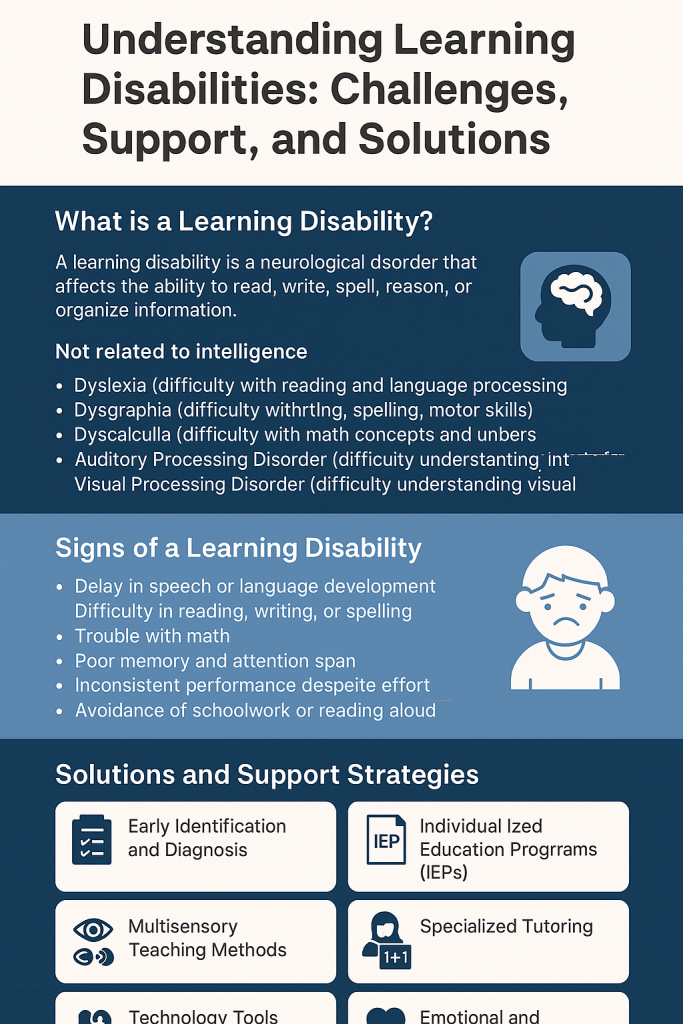
What is a Learning Disability?
A learning disability is a neurological disorder that impacts a person’s ability to read, write, spell, reason, recall, or organize information. It is not related to intelligence; children with learning disabilities often have average or above-average intelligence.
Some common types of learning disabilities include:
- Dyslexia – difficulty with reading and language processing
- Dysgraphia – difficulty with writing, spelling, and fine motor skills
- Dyscalculia – difficulty with math concepts and numbers
- Auditory Processing Disorder – difficulty understanding and interpreting sounds
- Visual Processing Disorder – difficulty understanding visual information
Signs of a Learning Disability
Parents and teachers should watch for red flags such as:
- Delay in speech or language development
- Difficulty in reading, writing, or spelling
- Trouble with math
- Poor memory and attention span
- Inconsistent performance despite effort
- Avoidance of schoolwork or reading aloud
- Low self-esteem or frustration with academic tasks
Early detection allows timely intervention, preventing emotional and academic struggles from deepening.
Causes and Myths
Learning disabilities are not caused by laziness, poor teaching, or low intelligence. They may be due to:
- Genetic factors
- Premature birth or low birth weight
- Brain injury or developmental delays
- Environmental factors such as exposure to toxins
Myth: Children outgrow learning disabilities.
Fact: While children don’t outgrow them, they can learn to manage and succeed with the right support.
Solutions and Support Strategies
1. Early Identification and Diagnosis
Consult educational psychologists, pediatricians, or child specialists for assessments. Early intervention can significantly improve outcomes.
2. Individualized Education Programs (IEPs)
IEPs are specially designed plans tailored to a child’s unique learning needs. Schools should provide accommodations such as extra time on tests, audiobooks, or alternate assignments.
3. Multisensory Teaching Methods
Using visual, auditory, and kinesthetic methods together helps children grasp and retain information better.
4. Specialized Tutoring
Remedial educators trained in special education can work one-on-one with the child using evidence-based approaches.
5. Technology Tools
There are many assistive tools such as:
- Text-to-speech apps
- Audiobooks
- Speech-to-text software
- Graphic organizers for writing support
6. Emotional and Psychological Support
Children with learning disabilities often suffer from low self-esteem. Counseling, peer support groups, and family encouragement are vital for emotional well-being.
7. Parent and Teacher Collaboration
Parents and educators must work as a team, communicating regularly and adapting strategies as needed. A supportive home environment makes a big difference.
Helping a Child Believe in Themselves
One of the most important things you can do for a child with a learning disability is to believe in them. Focus on their strengths, encourage effort, and celebrate small wins. Remind them—and yourself—that learning differently is not a limitation but a different path to success.
Conclusion
Learning disabilities are not roadblocks—they are simply detours. With early recognition, patience, appropriate strategies, and emotional support, every child can thrive in their own way. The goal is not just academic success, but building a confident, resilient individual who believes in their abilities.
Follow us on social media
Share this post on social media
Latest Post
- Overthinking: The Mental Trap That Steals Peace – Why we do it, how it harms us, and what we can do to break free
- ADHD: Not a Lack of Discipline, but a Different Way of Being
- Signs That You Are Ruining Your Relationship – How to recognize harmful patterns before it’s too late
- Why Faithful People Cheat: The Quiet Cracks That Break Relationships—and How to Heal Them
- Why Women Blame Their Husbands for All Their Problems(And what is really going on beneath the surface)
If you seek guidance with parenting, get in touch with us by filling the form below


Never shy from asking for help
When you face an issue ask for help. you are not the only one having problems. Everyone faces problems. Don’t need to be embarrassed about it. Ask for help from the people who can help you. Talk to your parents. elders, friends, relatives. or you can talk to us.
Website built with WordPress
 Dr. Alfred D'Silva
Leave a comment