What is ADHD?
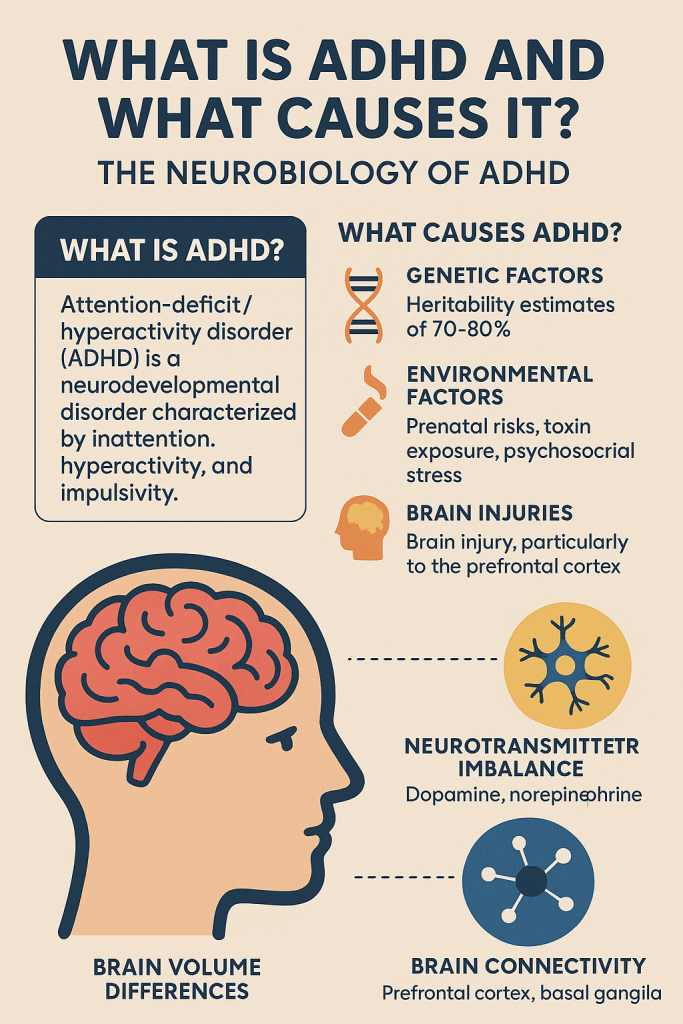
Attention-Deficit/Hyperactivity Disorder (ADHD) is a neurodevelopmental disorder that affects both children and adults. It is characterized by persistent patterns of inattention, hyperactivity, and impulsivity that interfere with daily functioning or development.
ADHD symptoms are typically grouped into two categories:
1. Inattentive Type – Difficulty sustaining attention, following instructions, organizing tasks.
2. Hyperactive-Impulsive Type – Excessive fidgeting, talking, restlessness, interrupting others.
3. Combined Type – Features of both inattention and hyperactivity-impulsivity.
What Causes ADHD?
ADHD does not have a single known cause, but multiple contributing factors have been identified, including:
1. Genetic Factors
ADHD tends to run in families.
Studies suggest heritability estimates of 70-80%, making it one of the most heritable psychiatric disorders.
Specific genes involved in dopamine regulation (like DRD4 and DAT1) have been linked to ADHD.
2. Environmental Factors
Prenatal risks: Exposure to alcohol, tobacco, or drugs during pregnancy; low birth weight; premature birth.
Toxin exposure: Early exposure to lead or pesticides may impact brain development.
Psychosocial stressors: Chaotic environments, neglect, or early trauma may exacerbate symptoms but are not direct causes.
3. Brain Injuries
Brain injury, particularly to the prefrontal cortex, may contribute in rare cases.
The Neurobiology of ADHD
1. Brain Structure and Volume Differences
Smaller brain volumes in key areas such as:
Prefrontal cortex (executive function, attention, impulse control)
Basal ganglia (motor control and behavior regulation)
Cerebellum (coordination, cognitive processes)
Delayed cortical maturation: Brain development in children with ADHD tends to lag behind by a few years.
2. Neurotransmitter Imbalance
The dopamine and norepinephrine systems play a central role.
Individuals with ADHD often have:
Low dopamine activity in brain circuits that regulate attention and reward.
Norepinephrine deficits, affecting alertness and focus.
This explains why stimulant medications (like methylphenidate and amphetamines) are effective — they increase dopamine and norepinephrine availability.
3. Brain Connectivity Issues
Reduced functional connectivity between brain regions, especially:
Prefrontal cortex and limbic system – affecting emotional regulation.
Default Mode Network (DMN) – which should deactivate during tasks requiring focus, but may remain active in ADHD, causing distraction.
Conclusion
ADHD is a biologically based disorder influenced by genetic, environmental, and neurochemical factors. It involves measurable differences in brain structure, function, and chemistry — especially related to dopamine pathways and executive functioning areas of the brain. Understanding its neurobiology helps reduce stigma and supports evidence-based treatment approaches.
Remember: ADHD does not define a person—it is just one part of who they are. With understanding and support, children and adults with ADHD can channel their unique strengths into lifelong success.
Homoeopathy has shown great improvements in cases of ADHD in children and adults. One should consider homoeopathy as a good treatment along with psychotherapy.
Follow us on social media
Share this post on social media
Latest Post
- Overthinking: The Mental Trap That Steals Peace – Why we do it, how it harms us, and what we can do to break free
- ADHD: Not a Lack of Discipline, but a Different Way of Being
- Signs That You Are Ruining Your Relationship – How to recognize harmful patterns before it’s too late
- Why Faithful People Cheat: The Quiet Cracks That Break Relationships—and How to Heal Them
- Why Women Blame Their Husbands for All Their Problems(And what is really going on beneath the surface)
If you seek guidance with ADHD and its management, get in touch with us by filling the form below


Never shy from asking for help
When you face an issue ask for help. you are not the only one having problems. Everyone faces problems. Don’t need to be embarrassed about it. Ask for help from the people who can help you. Talk to your parents. elders, friends, relatives. or you can talk to us.
Website built with WordPress
 Dr. Alfred D'Silva
Leave a comment