
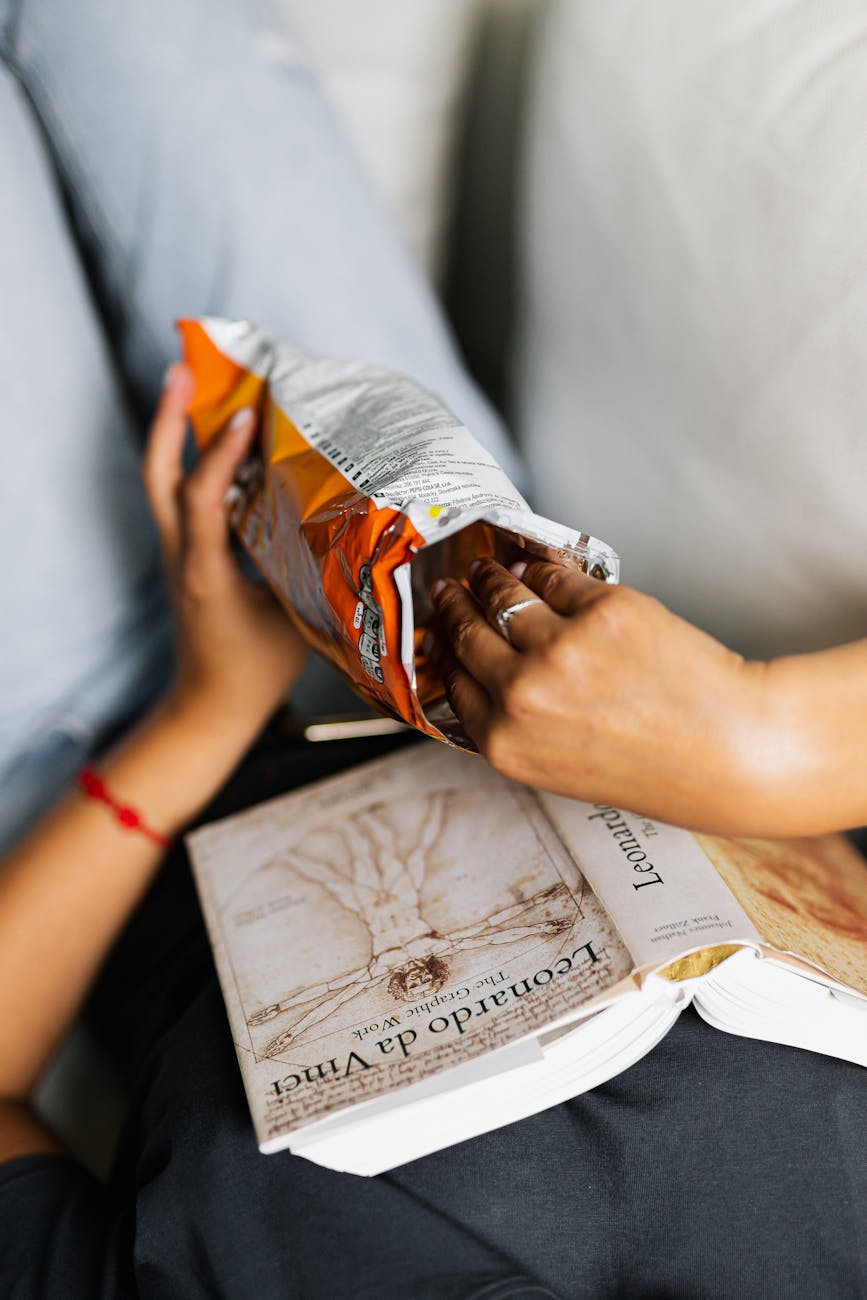
If you turn over any packaged food—biscuits, chips, sauces, juices, even products marketed as “healthy”—you’ll often find an ingredient quietly listed: maltodextrin.
It sounds technical and harmless, but its impact on health is far from simple.
This article explains what maltodextrin is, how the food industry uses it, and why it may be more harmful than most people realise.
What Exactly Is Maltodextrin?
Maltodextrin is a highly processed carbohydrate made from corn, rice, wheat, or potatoes.
Although it comes from natural sources, the end product is a synthetic, refined powder created through industrial processing.
Food companies love using it because it is:
- Cheap
- Tasteless or mildly sweet
- A bulking agent (adds volume)
- A thickener and preservative
- A way to improve texture and shelf-life
In simple words: maltodextrin makes packaged food more appealing, longer lasting, and less expensive—but not healthier.
Why Maltodextrin Can Be Bad for Your Health
Below are the key reasons, each explained with examples and a short story illustrating the real impact.
1. Maltodextrin Spikes Blood Sugar Faster Than Sugar Itself
Principle:
Maltodextrin has a very high glycaemic index (GI) of 90–110, which means it increases blood sugar faster than regular table sugar.
Example:
A “healthy” granola bar often contains maltodextrin. Even though its label says high fibre or low sugar, the maltodextrin inside causes a blood sugar spike similar to drinking a sugary cola.
Story:
A 14-year-old boy, Aarav, came to therapy because he had sudden energy crashes while studying.
His parents thought he wasn’t eating enough, but his lunchbox had “healthy” snacks: flavoured yoghurt, cereal bars, and protein chips—all containing maltodextrin.
Once those were removed, his energy levels stabilised dramatically.
Impact:
These repeated spikes drain energy, increase cravings, add weight, and may contribute to insulin resistance in the long run.
2. Maltodextrin Feeds Harmful Gut Bacteria
Principle:
Maltodextrin alters the gut microbiome, weakening the gut’s natural defences.
Example:
Studies show it promotes the growth of harmful bacteria like E. coli, increasing the risk of infections and inflammatory bowel issues.
Story:
One mother reported that her 12-year-old daughter had constant indigestion and bloating.
They thought it was junk food—but even “fitness foods” like flavoured peanuts, soups, and instant oats contained maltodextrin.
Once they reduced processed foods, her symptoms improved within weeks.
3. Maltodextrin Tricks the Brain Into Wanting More Food
Principle:
Because it gives volume without nutrients, the brain receives the signal “I ate something,” but the body receives nothing useful.
This mismatch increases cravings.
Example:
Potato chips: often labelled “No added sugar,” yet maltodextrin is one of the top ingredients.
You keep eating not because you’re hungry, but because your body is trying to get real nourishment.
4. Maltodextrin Helps Food Companies Create “Fake Healthy” Foods
Principle:
The food industry uses maltodextrin to make unhealthy products appear high-protein, low-fat, or low-sugar.
Example:
- Zero-sugar drinks
- Protein powders
- Weight-loss snacks
- Instant soups
- Children’s flavoured milk mixes
- “Digestive” biscuits
All commonly contain maltodextrin.
Story:
In a parenting workshop, a mother proudly shared that she had switched her 10-year-old from chocolate to “health drink” powders.
When we checked the label, the first three ingredients were sugar, maltodextrin, and synthetic vitamins.
Her shock turned into action—and within months, her child’s focus and energy improved.
5. Maltodextrin Is a Sign of Over-Processed Food
Principle:
Any product containing maltodextrin has gone through multiple steps of industrial processing.
This means synthetic additives, preservatives, and chemicals are also usually present.
Example:
A simple homemade lemonade has 3 ingredients.
A packaged “lemon drink” has 15–20—maltodextrin being one of them.
How the Food Industry Quietly Harms Health
Here is the reality:
1. The food industry prioritises shelf-life over human life.
Maltodextrin keeps products stable for years.
If you’d like, I can also create:
2. They add fillers to cut cost and maximise profit.
Maltodextrin is much cheaper than real food ingredients.
3. They use scientific language to confuse customers.
If they wrote “modified starch sugar,” everyone would avoid it.
So they write “maltodextrin.”
4. They market these products as “healthy” to parents and children.
Anything with the words natural, high-fibre, or fortified sells instantly.
5. They rely on consumers not reading labels.
And even if they do read labels, most do not understand ingredient chemistry.
So, What Should Parents Do?
1. Choose real food over packaged food.
If your food has a TV advertisement, it probably has maltodextrin.
2. Learn to read labels.
If maltodextrin is one of the first five ingredients, avoid it.
3. Replace “healthy snacks” with real alternatives.
- Nuts
- Fruits
- Homemade laddoos
- Boiled corn
- Chilla
- Poha
- Lemon water
- Coconut water
4. Talk to children about marketing tricks.
Empowering them early protects them for life.
Conclusion
Maltodextrin is not just a harmless additive—it is a sign of highly processed, nutrient-poor, sugar-spiking food that the industry sells as “healthy.”
Parents today must protect their children not only from academic stress, but from this silent food environment that harms physical and mental health.
If you like this article, please leave a comment, it helps and encourages us.
Follow us on social media
Share this page on
Read our Latest Post
- Overthinking: The Mental Trap That Steals Peace – Why we do it, how it harms us, and what we can do to break free
- ADHD: Not a Lack of Discipline, but a Different Way of Being
- Signs That You Are Ruining Your Relationship – How to recognize harmful patterns before it’s too late
- Why Faithful People Cheat: The Quiet Cracks That Break Relationships—and How to Heal Them
- Why Women Blame Their Husbands for All Their Problems(And what is really going on beneath the surface)
Get in touch with us by filling the form below


Never shy from asking for help
When you face an issue ask for help. you are not the only one having problems. Everyone faces problems. Don’t need to be embarrassed about it. Ask for help from the people who can help you. Talk to your parents. elders, friends, relatives. or you can talk to us.
Website built with WordPress
 Dr. Alfred D'Silva
Leave a comment