

Temper tantrums can be one of the most challenging and emotionally charged moments for any parent. Whether it’s a toddler screaming on the floor or an older child slamming doors, these outbursts can test your patience and leave you feeling helpless. However, tantrums are a normal part of childhood development, and how you handle them can make all the difference.
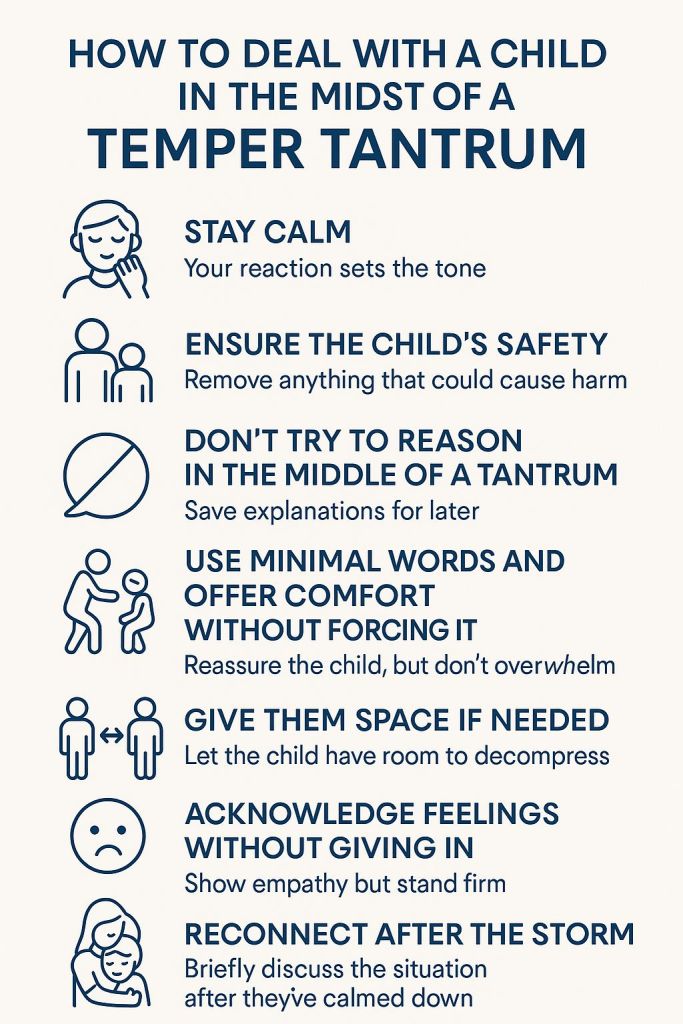
Here’s a practical guide on how to deal with a child in the midst of a temper tantrum—calmly, compassionately, and constructively.
1. Stay Calm – Your Reaction Sets the Tone
Principle: Children mirror adult behavior. If you stay calm, you model emotional regulation.
If your child throws a tantrum in the supermarket, take a deep breath. Avoid yelling or reacting with anger. Your composed response shows them how to manage intense emotions.
A mother once knelt down beside her screaming toddler in a store and softly said, “I see you’re upset. I’m here when you’re ready.” Within minutes, the child calmed down and reached for her hand. Her calm energy created a safe space for the child to settle.
2. Ensure the Child’s Safety
Principle: Physical safety must come first during any emotional episode.
If your child is throwing objects or hurting themselves, gently move them to a safe area. Remove anything that could cause injury.
A father noticed his son banging his head on the floor in frustration. He calmly placed a pillow under the child’s head and gently said, “I won’t let you hurt yourself. I’m right here.” His firm yet loving response prevented harm and started the calming process.
3. Don’t Try to Reason in the Middle of a Tantrum
Principle: Logic doesn’t work when emotions are flooding the brain.
Trying to explain why they can’t have a toy during a meltdown will likely escalate the situation. Instead, wait until they are calm to discuss and reason.
After her daughter’s screaming fit about bedtime, a mother waited until the next day to say, “Remember how upset you were last night? Let’s make a bedtime plan together.” The child was much more receptive once calm.
4. Use Minimal Words and Offer Comfort Without Forcing It
Principle: Sometimes less is more. Avoid overwhelming the child further with too much talking.
Say things like, “I’m here,” or “Take your time,” rather than launching into explanations or questions.
A little boy threw himself on the ground crying after leaving the park. His grandfather sat beside him silently, just offering a gentle hand on his back. The silent presence was more comforting than words.
5. Give Them Space if Needed
Principle: Some children need space to decompress.
If your child prefers to be alone during a tantrum, respect their boundary but stay close enough to monitor.
A child often ran to her room when upset. Her father would wait outside, occasionally saying, “I’m here when you’re ready.” This gave the child control over when she was ready to reconnect.
6. Acknowledge Feelings Without Giving In
Principle: Validating emotions is not the same as giving in to demands.
“I know you’re upset that we can’t have ice cream now. It’s okay to feel angry.”
A mother told her son, “It’s frustrating when things don’t go our way.” Her empathy helped him feel understood, even though she held firm on her decision.
7. Reconnect After the Storm
Principle: Once the child is calm, reconnect with love and reflection.
Hug your child and talk briefly about what happened. Help them name their feelings and think of better ways to express them next time.
After a meltdown, a father sat with his son and drew faces together—happy, sad, angry. It became a bonding and learning moment.
Final Thoughts
Tantrums are not a sign of bad parenting or a “naughty” child. They are cries for help from children who are still learning to regulate their emotions. Responding with patience, empathy, and firmness teaches your child vital emotional skills they will carry into adulthood.
Remember: Don’t fight the storm—anchor the child
Follow us on social media
Share this post on social media
Latest Post
- Overthinking: The Mental Trap That Steals Peace – Why we do it, how it harms us, and what we can do to break free
- ADHD: Not a Lack of Discipline, but a Different Way of Being
- Signs That You Are Ruining Your Relationship – How to recognize harmful patterns before it’s too late
- Why Faithful People Cheat: The Quiet Cracks That Break Relationships—and How to Heal Them
- Why Women Blame Their Husbands for All Their Problems(And what is really going on beneath the surface)
If you seek guidance with parenting, get in touch with us by filling the form below


Never shy from asking for help
When you face an issue ask for help. you are not the only one having problems. Everyone faces problems. Don’t need to be embarrassed about it. Ask for help from the people who can help you. Talk to your parents. elders, friends, relatives. or you can talk to us.
Website built with WordPress
 Dr. Alfred D'Silva
Leave a comment