


Parental love is powerful, unconditional, and essential. Every child deserves to feel safe, supported, and cherished. However, when this love turns into over-pampering—where every need is preempted, every demand is met, and every discomfort is shielded against—it can unintentionally harm the very child it aims to protect.
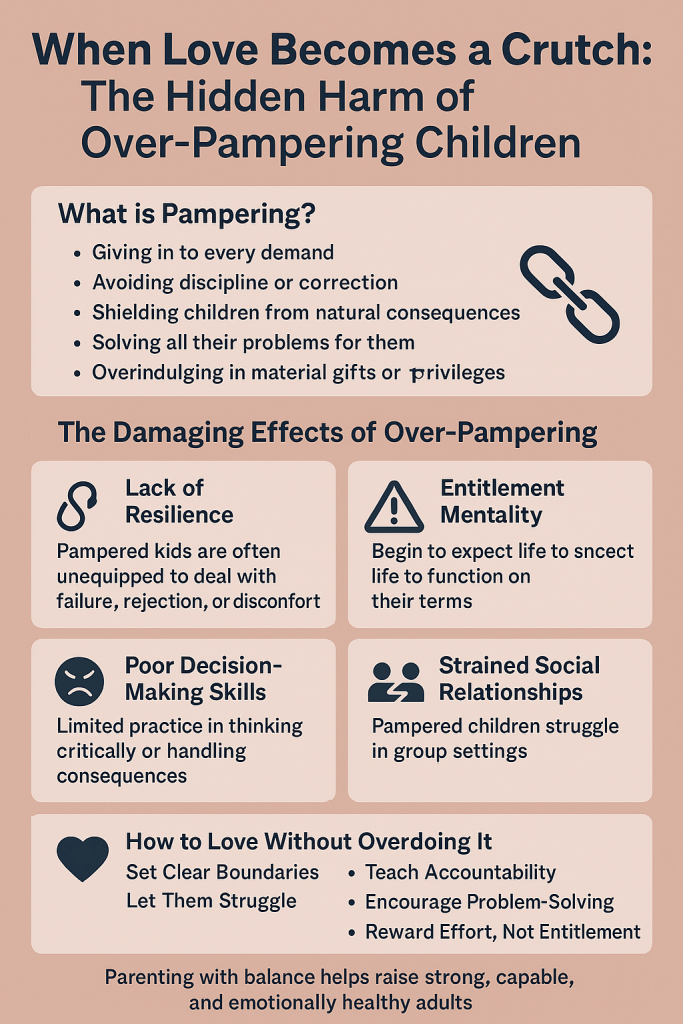
What is Pampering?
Pampering goes beyond nurturing. It involves:
- Giving in to every demand
- Avoiding discipline or correction
- Shielding children from natural consequences
- Solving all their problems for them
- Overindulging in material gifts or privileges
While it may seem like kindness, this behavior removes important growth opportunities and fosters emotional dependency.

The Damaging Effects of Over-Pampering
1. Lack of Resilience
Children need to face challenges to develop coping mechanisms. Pampered kids are often unequipped to deal with failure, rejection, or discomfort. When life doesn’t go their way, they may feel helpless or fall apart.
A child whose parents constantly intervene with teachers over minor issues may grow up unable to advocate for themselves or handle academic pressure independently.
2. Entitlement Mentality
When children are constantly given what they want without effort or limits, they begin to expect life to function on their terms. This entitlement can damage relationships, hinder academic or career growth, and lead to disappointment when reality doesn’t comply.
A teen raised with every luxury grew angry and depressed when his first job required hard work and delayed gratification—something he had never experienced.
3. Poor Decision-Making Skills
Pampering often includes making decisions for the child—what to eat, wear, or do—leaving them with little practice in thinking critically or handling consequences.
A child who never chooses their own clothes or manages their time may struggle with basic independence as a teenager.
4. Weak Emotional Regulation
Over-pampered children may never learn to tolerate frustration, boredom, or disappointment. Instead of managing emotions, they may explode in anger or withdraw in distress.
A 10-year-old who always got a new toy when upset began throwing tantrums when any wish was denied—because he hadn’t learned to self-soothe.
5. Strained Social Relationships
Peers value fairness, cooperation, and empathy. Pampered children often struggle in group settings where they can’t be the center of attention or bend rules to suit themselves.

How to Love Without Overdoing It
Set Clear Boundaries: Children feel more secure when they know what’s acceptable.
Let Them Struggle: Allow them to face challenges and offer support without taking over.
Teach Accountability: Hold them responsible for their actions and choices.
Encourage Problem-Solving: Ask, “What do you think you can do?” instead of jumping in to fix everything.
Reward Effort, Not Entitlement: Praise hard work, not just results or status.
In Conclusion
Pampering often comes from a place of deep love and good intention. But love is not about removing every obstacle—it’s about preparing your child to face the world with courage, independence, and integrity. Parenting with balance helps raise not just happy children, but strong, capable, and emotionally healthy adults.
Follow us on social media
Share this post on social media
Latest Post
- Overthinking: The Mental Trap That Steals Peace – Why we do it, how it harms us, and what we can do to break free
- ADHD: Not a Lack of Discipline, but a Different Way of Being
- Signs That You Are Ruining Your Relationship – How to recognize harmful patterns before it’s too late
- Why Faithful People Cheat: The Quiet Cracks That Break Relationships—and How to Heal Them
- Why Women Blame Their Husbands for All Their Problems(And what is really going on beneath the surface)
If you seek guidance with parenting, get in touch with us by filling the form below


Never shy from asking for help
When you face an issue ask for help. you are not the only one having problems. Everyone faces problems. Don’t need to be embarrassed about it. Ask for help from the people who can help you. Talk to your parents. elders, friends, relatives. or you can talk to us.
Website built with WordPress
 Dr. Alfred D'Silva
Leave a comment