

When people talk about parenting challenges, they often focus on the child—discipline, education, health, behavior. But one of the most overlooked yet critical challenges is the parent’s own well-being. In the endless race to meet their child’s needs, many parents forget that they too are human—with physical, emotional, and mental needs that must not be ignored.
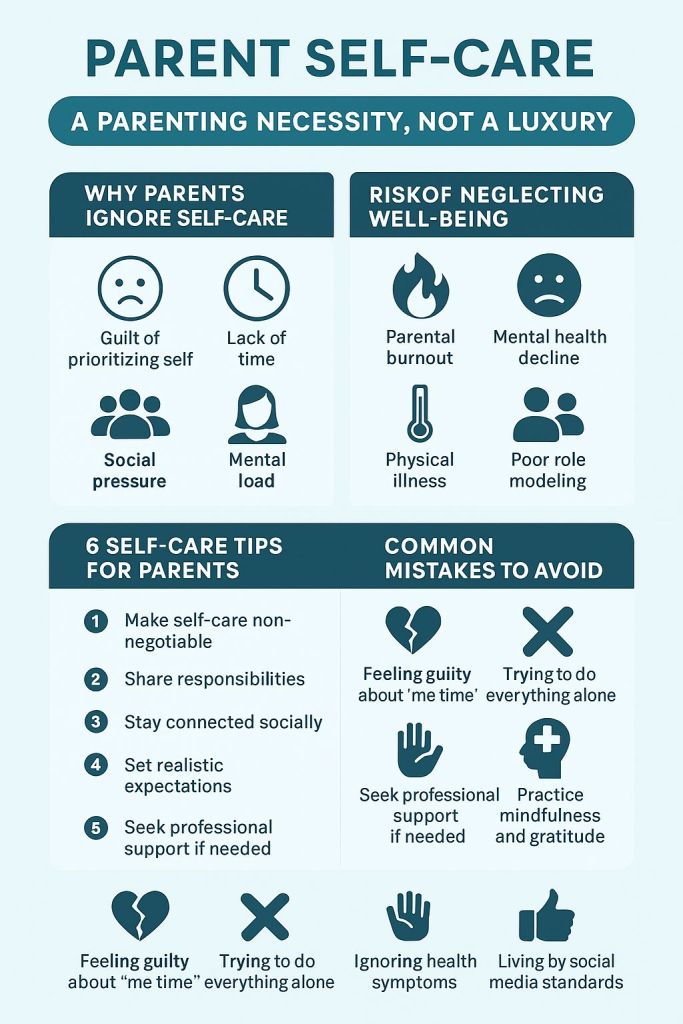
Why Self-Care Is a Parenting Challenge
1. Guilt of Prioritizing Self:
Many parents, especially mothers, feel guilty taking time for themselves, believing they should always put the family first.
2. Lack of Time:
Between work, household chores, helping with homework, and bedtime routines, parents feel there’s no time left for their own rest, hobbies, or social life.
3. Mental Load:
Constant worry about finances, schooling, health, and future plans drains emotional energy, often leading to stress and burnout.
4. Social Pressure:
Society glorifies the “sacrificing parent” image—especially in certain cultures—making self-care seem selfish or indulgent.
5. Sleep Deprivation and Physical Fatigue:
Many parents sacrifice sleep and personal health routines, believing these can “wait” until the kids grow older.
Consequences of Ignoring Your Well-Being
Parental Burnout:
Exhaustion leads to irritability, impatience, and even resentment towards the child or partner.
Mental Health Decline:
Stress, anxiety, or depression can quietly build up, impacting relationships and parenting quality.
Physical Illness:
Lack of rest and neglect of exercise or proper nutrition weakens the immune system, leading to frequent sickness.
Poor Role Modeling:
Children learn by observing. A parent who never prioritizes their health teaches the child that self-neglect is normal.

Principles for Parents to Take Care of Their Own Well-Being
1. Make Self-Care Non-Negotiable
Schedule small daily rituals—morning tea, 10 minutes of meditation, evening walk. Treat this time as essential, not optional.
Example:
Raj, a father of two, sets aside 15 minutes every evening to read. His children respect this time because they see it as his “quiet zone,” just like their own study time.
2. Share Responsibilities
Parenting is a shared duty. Involve your partner, older kids, or extended family to distribute tasks and relieve stress.
3. Stay Connected Socially
Regular chats with friends, outings, or hobbies outside the family help parents recharge emotionally.
4. Set Realistic Expectations
Perfection is impossible. Accept that the house may be messy, homework may be late, and some days will go wrong.
5. Seek Professional Support if Needed
Therapists, counselors, or parenting coaches can help manage overwhelming feelings and offer fresh coping strategies.
6. Practice Mindfulness and Gratitude
Simple breathing exercises or a gratitude journal can bring calm and perspective, even on chaotic days.

Common Mistakes to Avoid
Feeling Guilty About “Me Time”:
Remember—recharging yourself makes you a better parent.
Trying to Do Everything Alone:
Ask for help. Seeking support is strength, not weakness.
Ignoring Health Symptoms:
Do not delay medical checkups, proper meals, or sleep.
Living by Social Media Standards:
Do not compare your real life with others’ filtered online versions. Every family has hidden struggles.
A True Story of Realization
Priya, a working mother, constantly skipped meals and sleep to manage work and home. One day, she fainted at her child’s school event. This wake-up call made her realize that she was no good to her family if she herself was broken. She began prioritizing health, dividing tasks with her spouse, and practicing yoga daily—improving both her well-being and the family’s happiness.
Conclusion
Self-care is not selfish—it’s survival. A happy, healthy, and fulfilled parent raises happier, stronger, and more secure children. When parents care for their well-being, they create an environment where the whole family can thrive.
Remember: You cannot pour from an empty cup.
(Thank you for reading the last of the 12 posts in which I describe each of the 12 parenting challenges in detail. In case you have not read them then please scroll and read the previous 12 post.)
Follow us on social media
Share this page on
Read our Latest Post
- Overthinking: The Mental Trap That Steals Peace – Why we do it, how it harms us, and what we can do to break free
- ADHD: Not a Lack of Discipline, but a Different Way of Being
- Signs That You Are Ruining Your Relationship – How to recognize harmful patterns before it’s too late
- Why Faithful People Cheat: The Quiet Cracks That Break Relationships—and How to Heal Them
- Why Women Blame Their Husbands for All Their Problems(And what is really going on beneath the surface)
Get in touch with us by filling the form below


Never shy from asking for help
When you face an issue ask for help. you are not the only one having problems. Everyone faces problems. Don’t need to be embarrassed about it. Ask for help from the people who can help you. Talk to your parents. elders, friends, relatives. or you can talk to us.
Website built with WordPress
 Dr. Alfred D'Silva
Leave a comment