

In the digital age, parenting has taken on a new and urgent challenge: keeping children safe both online and offline. As technology connects children to the world, it also exposes them to unseen risks. Simultaneously, traditional safety concerns like bullying, accidents, and stranger danger remain ever-present in the physical world. Balancing both realms of safety is a tough but essential task for modern parents.
Why Safety is a Growing Parenting Challenge
1. Pervasive Technology:
Smartphones, tablets, and computers are now a part of everyday life. Children as young as five can access the internet, making it difficult for parents to monitor all interactions.
2. Online Threats:
Cyberbullying, online predators, scams, misinformation, and exposure to inappropriate content are constant dangers lurking behind the screen.
3. Offline Risks Remain:
Despite the digital focus, offline safety threats like traffic accidents, peer pressure, substance abuse, and physical bullying continue to pose serious risks.
4. False Sense of Security:
Some parents may believe their child is “safe at home” when using devices, unaware that online threats can be as harmful as physical ones.
5. Lack of Awareness:
Many parents are not fully informed about the latest online platforms, apps, and digital dangers, leaving their kids vulnerable.
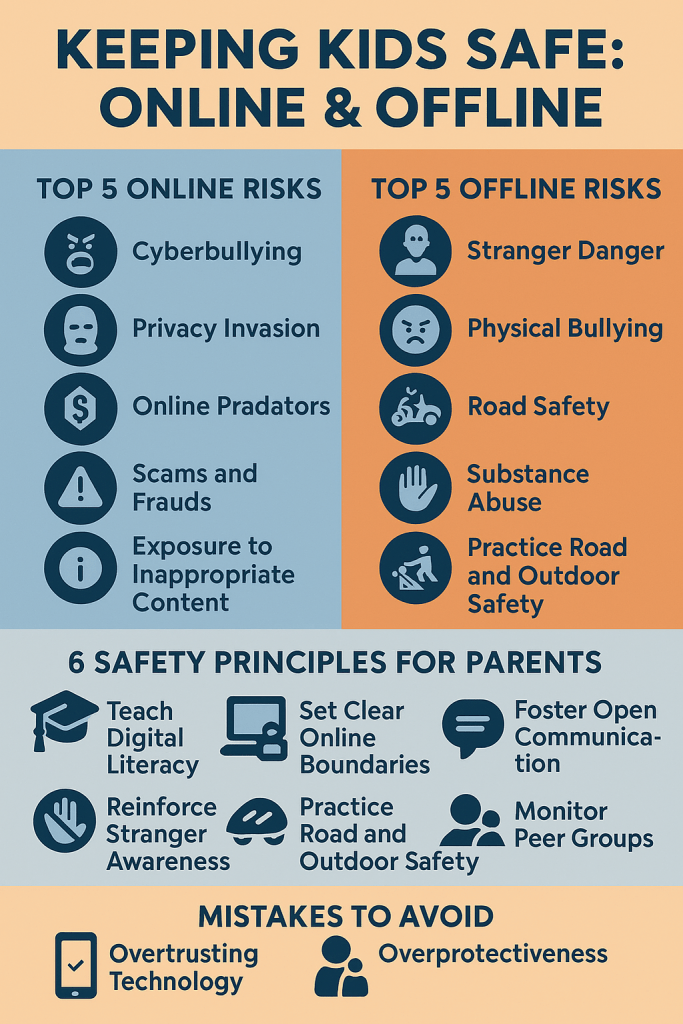
Common Online Risks
Cyberbullying: Harassment through messages, posts, or comments.
Privacy Invasion: Sharing personal information unknowingly.
Online Predators: Strangers manipulating children for harmful purposes.
Scams and Frauds: Fake offers, contests, or apps targeting young users.
Exposure to Inappropriate Content: Violence, pornography, or hate speech.
Common Offline Risks
Stranger Danger: Risks of abduction or exploitation.
Physical Bullying: Harassment at school or in the neighborhood.
Road Safety: Risk of accidents while cycling, walking, or playing outdoors.
Substance Abuse: Exposure to alcohol, tobacco, or drugs through peers.
Unsafe Play Areas: Poorly maintained playgrounds or hazardous spaces.
Principles to Ensure Safety
1. Teach Digital Literacy
Educate children about privacy, safe browsing, and the importance of not sharing personal details online.
Explain why sharing a home address or school name on social media can lead to serious risks.
2. Set Clear Online Boundaries
Limit screen time, block harmful sites, and use parental controls. Monitor online activity without violating trust.
3. Foster Open Communication
Encourage kids to talk about anything that feels uncomfortable—whether online chats or offline incidents—without fear of punishment.
12-year-old Aanya told her mother about an unknown “friend” who asked strange questions on a gaming app. Because of this open relationship, her mother was able to intervene in time.
4. Reinforce Stranger Awareness
Teach simple safety rules like not accepting gifts from strangers, never getting into a car without permission, and shouting for help if needed.
5. Practice Road and Outdoor Safety
Make wearing helmets, using pedestrian crossings, and obeying traffic rules a habit.
6. Monitor Peer Groups
Know who your child spends time with. Discuss peer pressure and teach assertiveness skills to resist harmful influences.
Common Mistakes to Avoid
Over trusting Technology:
Believing parental control apps are enough without personal involvement.
Overprotectiveness:
Denying independence can lead children to hide risky behavior out of rebellion.
Ignoring Online Life:
Many parents overlook the importance of what their children do online, assuming “virtual” equals “harmless.”
Conclusion
Safety is not about instilling fear; it’s about empowering children to make wise choices—both online and offline.
Modern parenting requires a blend of education, vigilance, and open communication to help children navigate two interconnected worlds confidently and securely.
In an era where a child can be harmed by both a stranger on the street and a stranger on a screen, safety is no longer optional—it is foundational.
(Keep reading the following 2 post as a continuation of the article in which I describe each of the 12 challenges of parenting in detail. In case you missed out do read the previous 10 post in which I have described each of the 12 parenting challenges)
Follow us on social media
Share this page on
Read our Latest Post
- Overthinking: The Mental Trap That Steals Peace – Why we do it, how it harms us, and what we can do to break free
- ADHD: Not a Lack of Discipline, but a Different Way of Being
- Signs That You Are Ruining Your Relationship – How to recognize harmful patterns before it’s too late
- Why Faithful People Cheat: The Quiet Cracks That Break Relationships—and How to Heal Them
- Why Women Blame Their Husbands for All Their Problems(And what is really going on beneath the surface)
Get in touch with us by filling the form below


Never shy from asking for help
When you face an issue ask for help. you are not the only one having problems. Everyone faces problems. Don’t need to be embarrassed about it. Ask for help from the people who can help you. Talk to your parents. elders, friends, relatives. or you can talk to us.
Website built with WordPress
 Dr. Alfred D'Silva
Leave a comment