

In today’s connected world, peer pressure and social influence are among the most difficult challenges parents face while raising children. As children grow, their desire for acceptance and belonging becomes stronger, making them more vulnerable to the opinions, expectations, and behaviors of friends, classmates, and even strangers on social media.
Understanding Peer Pressure and Social Influence
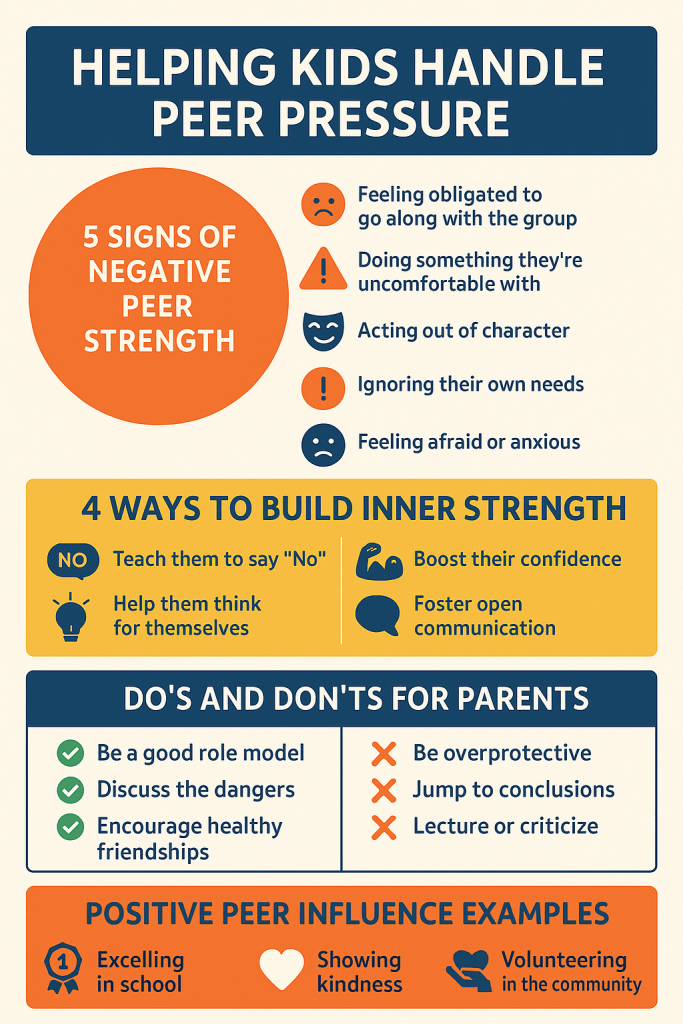
Peer pressure is the direct or indirect influence exerted by peers that encourages an individual to change their attitudes, values, or behaviors to conform to group norms. Social influence extends this pressure beyond peers to include media, cultural trends, and society at large.
For children and teens, this influence can affect choices related to fashion, behavior, language, technology use, academics, and even risk-taking behaviors like smoking, drinking, or bullying.
Why is this a Parenting Challenge?
1. Loss of Parental Control:
As children enter adolescence, the impact of peers often becomes stronger than parental guidance. What friends think may start mattering more than what parents say.
2. Fear of Rejection:
Kids may adopt unhealthy habits simply to avoid being left out or ridiculed, such as skipping classes, lying, or engaging in unsafe activities.
3. Social Media Amplification:
Social media magnifies peer pressure by making comparison constant and unavoidable. The “likes,” “followers,” and viral challenges can drive kids to behave in ways they normally wouldn’t.
4. Identity Confusion:
Children might struggle to balance their true selves with the version they present to fit into peer groups. This can lead to anxiety, low self-esteem, or even depression.

Principles to Help Children Resist Negative Influence
1. Teach Assertiveness:
Children need to learn to say “No” confidently without guilt. Role-play scenarios where they may face peer pressure and practice polite but firm refusal.
A teenager is offered a vape by a group at a party. If trained early, they can firmly say, “No thanks, that’s not for me,” and walk away confidently.
2. Build Self-Esteem:
A confident child is less likely to seek validation from peers. Celebrate their strengths, achievements, and uniqueness regularly.
Neha, a 12-year-old, was body-shamed at school. Her mother focused on building Neha’s self-worth through positive affirmations and involving her in dance—her passion. Over time, Neha’s confidence outshone the criticism, and she began inspiring her classmates.
3. Encourage Independent Thinking:
Teach children to evaluate choices by asking, “Is this right for me?” or “What could be the consequences?” rather than simply following the crowd.
4. Open Communication:
Maintain a safe space where children feel comfortable sharing their struggles without fear of punishment. Listen more than you speak.
5. Model Positive Behavior:
Parents who demonstrate confidence, critical thinking, and self-respect set a living example for their children to emulate.
When Peer Pressure is Positive
Not all peer influence is harmful. Friends can motivate children to excel in studies, sports, creativity, and community service. As a parent, guide them to choose friends who encourage positive growth.

Not all peer influence is harmful. Friends can motivate children to excel in studies, sports, creativity, and community service. As a parent, guide them to choose friends who encourage positive growth.
Conclusion
Peer pressure and social influence are inevitable, but with conscious parenting, their negative effects can be minimized. Raising emotionally strong, confident, and self-aware children ensures they make wise choices—even when no one is watching.
Remember, the goal is not to shield children from the world but to equip them to face it with courage and wisdom.
(Keep reading the following 5 post as a continuation of the article in which I describe each of the 12 challenges of parenting in detail. In case you missed out do read the previous 7 post in which I have described each of the 12 parenting challenges)
Follow us on social media
Share this page on
Read our Latest Post
- Overthinking: The Mental Trap That Steals Peace – Why we do it, how it harms us, and what we can do to break free
- ADHD: Not a Lack of Discipline, but a Different Way of Being
- Signs That You Are Ruining Your Relationship – How to recognize harmful patterns before it’s too late
- Why Faithful People Cheat: The Quiet Cracks That Break Relationships—and How to Heal Them
- Why Women Blame Their Husbands for All Their Problems(And what is really going on beneath the surface)
Get in touch with us by filling the form below


Never shy from asking for help
When you face an issue ask for help. you are not the only one having problems. Everyone faces problems. Don’t need to be embarrassed about it. Ask for help from the people who can help you. Talk to your parents. elders, friends, relatives. or you can talk to us.
Website built with WordPress
 Dr. Alfred D'Silva
Leave a comment