

In today’s fast-paced, high-pressure world, emotional and mental well-being is becoming just as important as physical health—especially for children and teenagers. Yet, this remains one of the least understood and most neglected parenting challenges.
Many parents focus on education, discipline, or behavior but may overlook signs of stress, anxiety, sadness, or low self-esteem that quietly impact their child’s inner world. Raising emotionally healthy and mentally resilient children is no longer optional—it is essential.

1. Understanding Emotional Health: The Foundation of Growth
Principle: Emotions are not weaknesses; they are signals that deserve attention.
Children feel a wide range of emotions—joy, fear, anger, sadness, frustration—but are often unable to express or understand them fully. Parents sometimes dismiss these feelings with phrases like “Don’t cry” or “Be strong”, unintentionally teaching kids to suppress emotions rather than process them.
Example:
A 9-year-old boy started refusing to go to school, complaining of stomach aches. Doctors found nothing wrong. After gentle conversations, the mother discovered he was being bullied. His stomach aches were anxiety in disguise.
Lesson: Emotional issues often show up as physical symptoms. Pay attention to unusual behavior or complaints.
2. Mental Health Matters: Recognize the Early Signs
Principle: Mental health is not only for adults—it starts in childhood.
Many parents ignore signs of anxiety, depression, or social withdrawal thinking children “will outgrow it.” But early mental health struggles can grow into serious issues if overlooked.

Example:
A teenage girl, once lively and talkative, became quiet, stayed locked in her room, and lost interest in friends. Her parents thought it was “just teenage moodiness.” Only after school intervention did they learn she was facing depression.
Lesson: Changes in mood, behavior, eating or sleeping patterns must not be ignored.
3. Open Conversations: Break the Mental Health Taboo
Principle: Talking openly about feelings builds emotional strength.
Many homes still treat mental health as a taboo subject. This silence leads to fear, guilt, or shame around emotional struggles.

Example:
One father made a daily habit of asking his son, “How did you feel today?” rather than “What did you do today?” This simple shift opened doors for deeper conversation and helped his son express both joy and stress without hesitation.
Lesson: Make emotional check-ins a normal part of family life.
4. Teach Emotional Intelligence (EQ), Not Just IQ
Principle: Children must learn to name, manage, and understand their emotions.
Just like reading or math, emotional intelligence can—and must—be taught. Teaching kids to identify their feelings, regulate anger, express sadness or handle disappointment equips them for life.
Example:
A mother noticed her daughter throwing tantrums when upset. Instead of punishment, she taught her to name her feelings: “I feel angry because…” Over time, the tantrums reduced, replaced by words.
Lesson: Emotionally literate kids become confident, empathetic, and resilient adults.
5. Reduce Pressure, Increase Support
Principle: Unrealistic expectations damage mental health.
Constant academic, social, or performance pressure can strain a child’s mental peace. Success-driven parenting must be replaced with support-driven parenting.

Example:
A student was overwhelmed by coaching classes, extra tuition, and competitions. His stress showed in sleep problems and irritability. His parents reduced his activities, giving him downtime and play. His mood, health, and performance improved.
Lesson: Sometimes, less is more. Protect your child’s peace of mind.
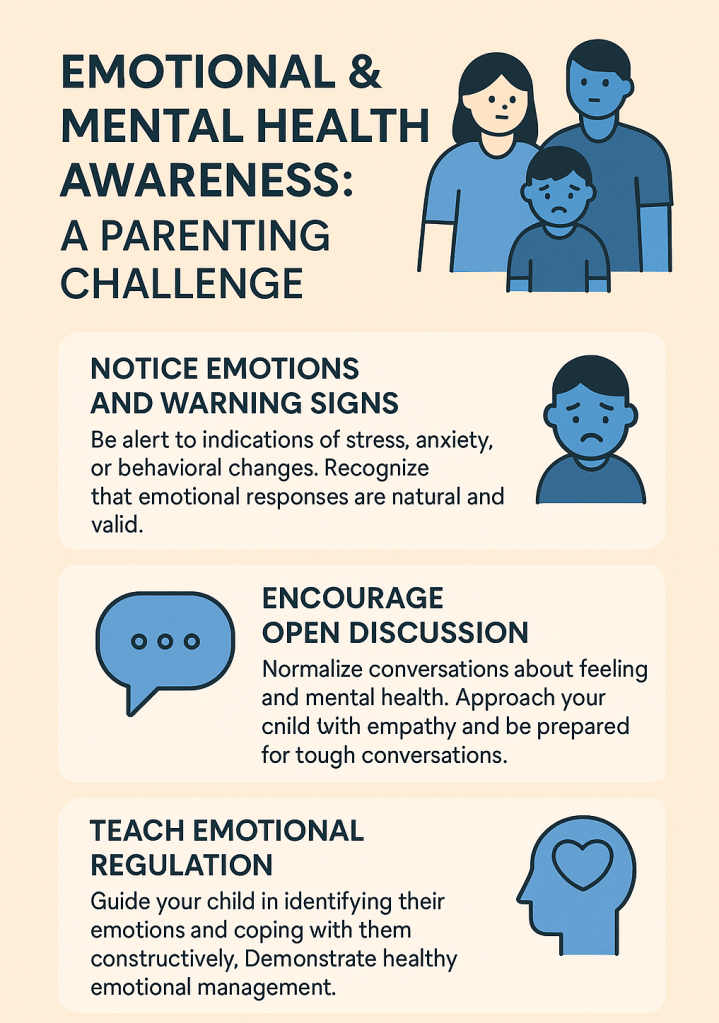
Conclusion: Raising Happy Minds, Not Just Successful Children
Parenting is no longer just about good marks or good manners—it’s about raising emotionally healthy, mentally strong, and self-aware individuals. By being emotionally aware parents, you shape children who know how to handle life’s ups and downs with courage and grace.
✔️ Notice emotional signals.
✔️ Be approachable.
✔️ Teach emotional skills.
✔️ Support mental well-being openly.
Your child’s mind is their greatest asset. Guard it with care.
(Keep reading the following 5 post as a continuation of this article in which I describe each of the 12 challenges in detail.)
Follow us on social media
Share this page on
Read our Latest Post
- Overthinking: The Mental Trap That Steals Peace – Why we do it, how it harms us, and what we can do to break free
- ADHD: Not a Lack of Discipline, but a Different Way of Being
- Signs That You Are Ruining Your Relationship – How to recognize harmful patterns before it’s too late
- Why Faithful People Cheat: The Quiet Cracks That Break Relationships—and How to Heal Them
- Why Women Blame Their Husbands for All Their Problems(And what is really going on beneath the surface)
Get in touch with us by filling the form below


Never shy from asking for help
When you face an issue ask for help. you are not the only one having problems. Everyone faces problems. Don’t need to be embarrassed about it. Ask for help from the people who can help you. Talk to your parents. elders, friends, relatives. or you can talk to us.
Website built with WordPress
 Dr. Alfred D'Silva
Leave a comment