
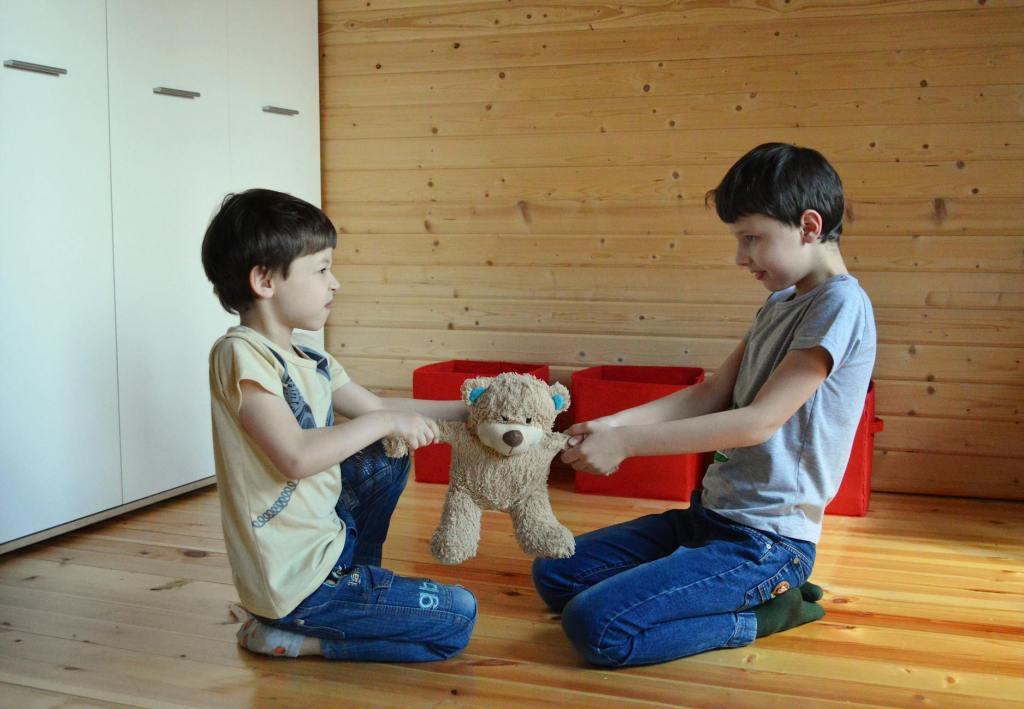
Parenting is a rewarding journey but not without its hurdles. Among the biggest challenges parents face is managing their child’s behaviour and ensuring discipline — a task that tests patience, consistency, and understanding every day.
Why Behaviour and Discipline Are Difficult to Handle
Children are naturally curious, impulsive, and full of energy. As they grow, they test boundaries to understand what is acceptable and what is not. This boundary-testing is normal, but it can frustrate parents — especially when it leads to tantrums, disobedience, aggression, lying, or defiance.
The problem becomes harder when:
Both parents have differing discipline styles.
Parents react out of anger or fatigue.
There is inconsistency in rules.
The child has emotional or behavioural disorders (like ADHD or anxiety).
If left unchecked, these problems can strain the parent-child relationship and create a stressful home environment.
Principles for Managing Behaviour and Discipline Issues
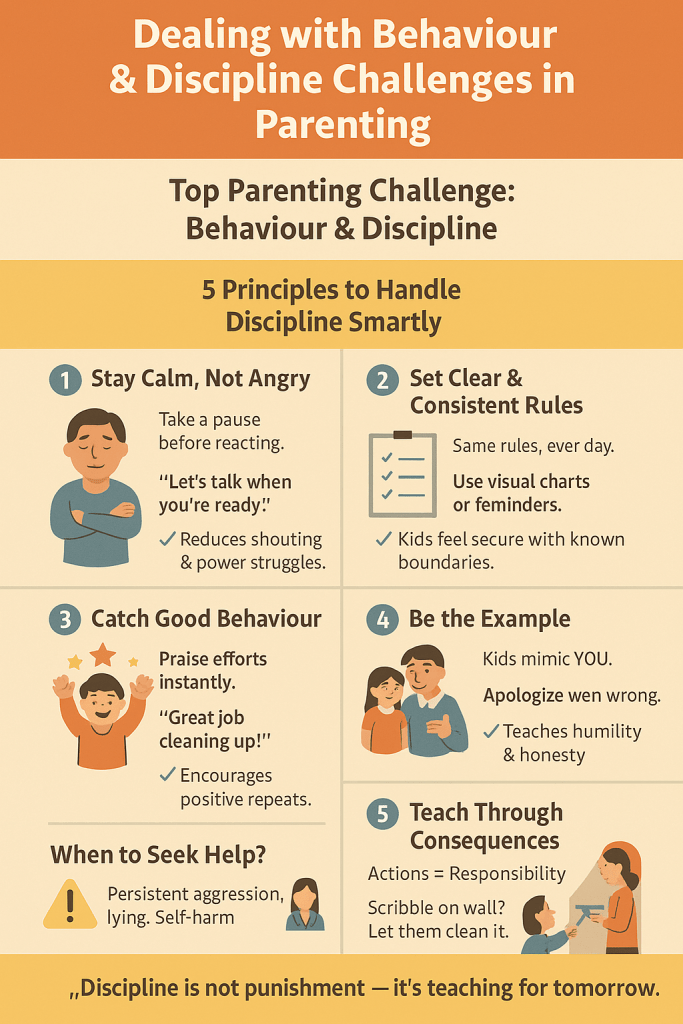
1. Be Calm, Not Reactive
Never discipline when angry.
If your child yells or breaks something, take a moment to breathe deeply or step away before responding. Reacting harshly can escalate the conflict and model the wrong kind of behaviour.
A father once shared how he stopped yelling at his son after realizing that his anger only made his son more rebellious. Instead, when his son misbehaved, he calmly said, “Let’s talk when you’re ready.” Over time, this reduced shouting matches and built understanding.
2. Set Clear, Consistent Rules
Children feel safer when they know the boundaries.
If screen time is limited to 30 minutes after homework, this rule must apply every day — not just when the parent remembers.
A mother found her 8-year-old sneaking in extra gaming hours. She introduced a visual “screen time chart” on the fridge. The chart made the rule visible and clear — no arguments. Within weeks, her son started monitoring his own time.
3. Use Positive Reinforcement
Catch them being good and praise them.
When your child shares toys or finishes homework without nagging, acknowledge it immediately: “I’m so proud you cleaned up without being told!”
A teacher turned parent realized that punishing her daughter’s messiness didn’t work. Instead, she started praising every small effort of tidying up. The positive attention motivated her daughter to keep her room cleaner more often.
4. Be a Role Model
Children copy what they see.
If parents shout, children learn shouting is acceptable. If parents apologize when wrong, kids learn humility.
A boy once refused to apologize after hurting his sister. His father knelt, apologized for shouting earlier, and explained why saying sorry matters. Soon after, the boy whispered, “Sorry,” to his sister — following his dad’s example.
5. Consequences Must Teach, Not Punish
Discipline should guide, not shame.
If a child draws on walls, instead of scolding, make them clean it up. This teaches responsibility.
A girl scribbled on the wall. Instead of punishment, her parents gave her cleaning supplies and said, “It’s your art, you clean your canvas.” She cleaned it and slowly stopped drawing on the walls — understanding cause and effect.

When to Seek Help
If the child’s behaviour becomes harmful to themselves or others, or if discipline struggles are severely impacting family peace, it’s wise to consult a child counsellor, therapist, or parenting coach. Sometimes, underlying issues like ADHD, anxiety, or trauma need professional support.
Final Thoughts
Dealing with behaviour and discipline challenges is not about control — it’s about connection, teaching, and guiding.
Consistency, calmness, and understanding can transform daily battles into opportunities for growth — for both child and parent.
Remember: Discipline is not about making children pay for what they did wrong but about helping them do right in the future.
(Keep reading the following 9 post as a continuation of this article in which I describe each of the 12 challenges in detail.)
Follow us on social media
Share this page on
Read our Latest Post
- Overthinking: The Mental Trap That Steals Peace – Why we do it, how it harms us, and what we can do to break free
- ADHD: Not a Lack of Discipline, but a Different Way of Being
- Signs That You Are Ruining Your Relationship – How to recognize harmful patterns before it’s too late
- Why Faithful People Cheat: The Quiet Cracks That Break Relationships—and How to Heal Them
- Why Women Blame Their Husbands for All Their Problems(And what is really going on beneath the surface)
Get in touch with us by filling the form below


Never shy from asking for help
When you face an issue ask for help. you are not the only one having problems. Everyone faces problems. Don’t need to be embarrassed about it. Ask for help from the people who can help you. Talk to your parents. elders, friends, relatives. or you can talk to us.
Website built with WordPress
 Dr. Alfred D'Silva
Leave a comment