

In today’s digital world, managing screen time has become one of the toughest and most confusing parenting challenges. Screens are everywhere—phones, tablets, computers, TVs, and even smartwatches. While technology offers immense benefits, its overuse can harm a child’s development, behavior, and health.
Let’s explore why this is a growing challenge and how parents can tackle it effectively.
Why Managing Screen Time is a Parenting Challenge
1. Technology is Essential, Yet Addictive
Devices are needed for education, information, and communication. But they are also designed to keep users hooked. Social media apps, games, and endless videos create a dopamine loop, especially for young minds.
Example:
Eight-year-old Riya started using her tablet for online classes. Over time, she began watching YouTube videos for hours, becoming irritable when asked to stop.
2. Parents Themselves Struggle With Screen Balance
Children imitate adults. If parents are constantly on their phones, kids pick up the same habits. The “do as I say, not as I do” approach rarely works.
Example:
A father scrolling endlessly through his phone during dinner unknowingly signals to his son that screens are more interesting than real conversations.
3. Peer Pressure and Social Expectations
Many children say, “Everyone in my class has a phone!” Parents fear their kids will feel left out if they don’t allow access. Finding the middle ground is tough.
Example:
A 12-year-old boy demanded a smartphone because his friends had one, making his parents feel guilty for delaying it.
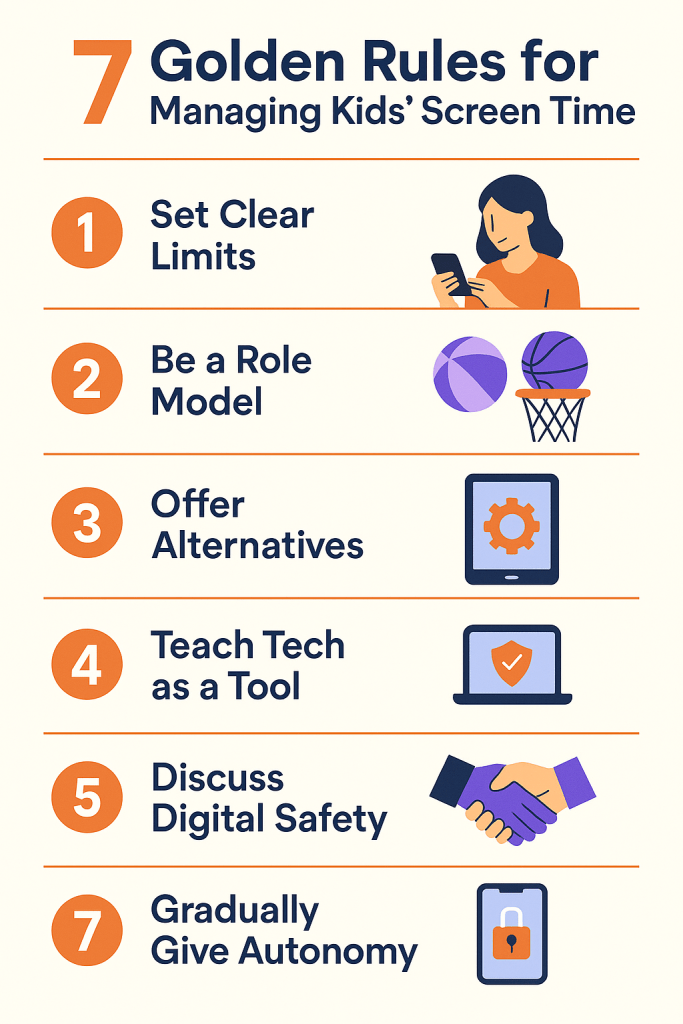
Principles to Manage Screen Time Effectively
1. Set Clear, Consistent Limits
Define “tech-free” times and zones—like no screens during meals, study hours, or before bedtime. Stick to these rules.
✔ Tip: Create a “Family Technology Agreement” that lists these rules and consequences for breaking them.
2. Be a Role Model
Children watch what parents do. Reduce your own unnecessary screen time to inspire them to do the same.
✔ Story: A mother decided to read a book every evening instead of scrolling her phone. Soon, her daughter joined her with her own book.
3. Encourage Alternative Activities
Promote outdoor play, board games, reading, art, and family bonding time. The less bored a child feels, the less they’ll seek screens.
✔ Tip: Keep sports gear, puzzles, and craft materials easily accessible.
4. Teach Tech as a Tool, not a Toy
Help children see gadgets as tools for learning, creativity, and skill-building—not just entertainment.
✔ Example: Introduce your child to coding apps, music-making software, or drawing tools instead of endless gaming.
5. Discuss Online Dangers & Digital Etiquette
Talk about cyberbullying, privacy, and the dangers of excessive screen time. Empower your child with knowledge.
✔ Tip: Watch an online safety video together and discuss it.
6. Allow Gradual Autonomy
As children grow, involve them in deciding screen limits. This builds responsibility and self-regulation.
✔ Story: A teenager negotiated weekend gaming hours with his parents in exchange for finishing assignments and chores.
7. Use Technology Wisely
Parental control apps and screen limit settings can help monitor usage without constant nagging.
✔ Tip: Set app time limits on phones or tablets and get weekly screen reports.
Conclusion: Balance is the Key
Managing screen time isn’t about banning technology; it’s about teaching balance. Like any tool, technology can build or break depending on how it’s used. By setting healthy limits, modeling good habits, and encouraging mindful use, parents can help their children become responsible digital citizens.
Remember: The goal is not control but connection—with your child, their world, and their well-being.
(Keep reading the following 10 post as a continuation of this article in which I describe each of the 12 challenges in detail.)
Follow us on social media
Share this page on
Read our Latest Post
- Overthinking: The Mental Trap That Steals Peace – Why we do it, how it harms us, and what we can do to break free
- ADHD: Not a Lack of Discipline, but a Different Way of Being
- Signs That You Are Ruining Your Relationship – How to recognize harmful patterns before it’s too late
- Why Faithful People Cheat: The Quiet Cracks That Break Relationships—and How to Heal Them
- Why Women Blame Their Husbands for All Their Problems(And what is really going on beneath the surface)
If you need any advice on how to deal with your child, get in touch with us by filling the form below


Never shy from asking for help
When you face an issue ask for help. you are not the only one having problems. Everyone faces problems. Don’t need to be embarrassed about it. Ask for help from the people who can help you. Talk to your parents. elders, friends, relatives. or you can talk to us.
Website built with WordPress
 Dr. Alfred D'Silva
Leave a comment