

“Behind every moody teenager is a child figuring out how to grow up. Be their guide, not their judge.“
Teen behaviour problems are not signs of bad parenting or bad kids — they are signs of growth. With patience, empathy, and communication, parents can guide their teens safely through this stormy but exciting phase of life.
Adolescence is a turbulent, confusing, and often frustrating time — not only for teenagers but also for their parents. Many parents find themselves asking: “Why is my child so moody, defiant, or distant these days?” Understanding the reasons behind teen behaviour problems is the first step to bridging this emotional gap.

Why Do Teens Exhibit Problem Behaviours?
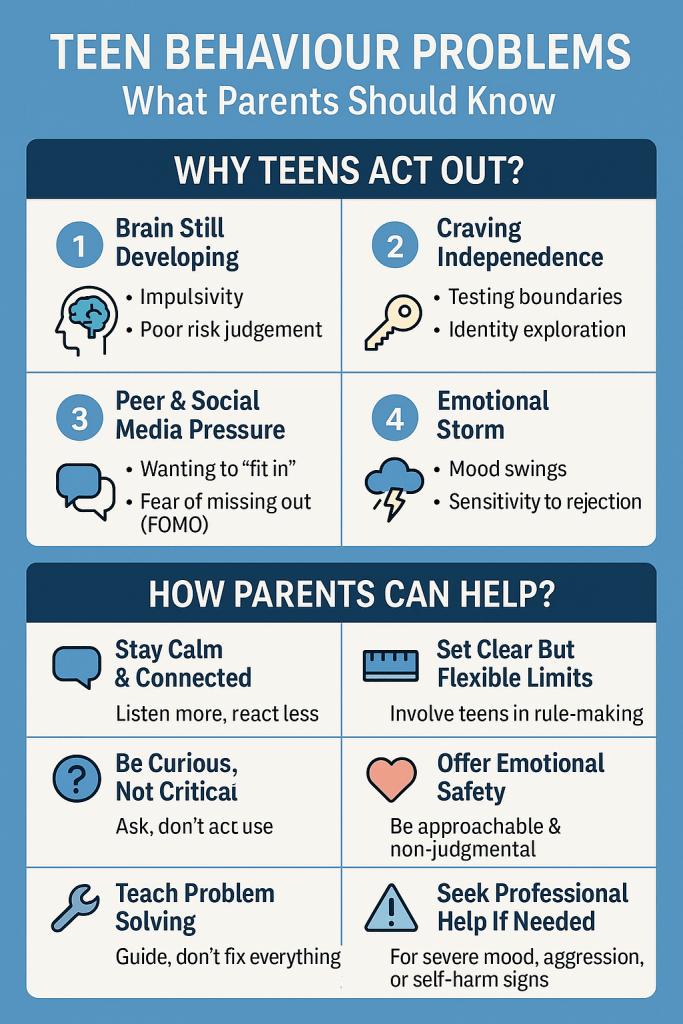
1. Brain Development
The teenage brain is still under construction, especially the parts responsible for reasoning, impulse control, and risk evaluation. This biological fact explains why teens may act impulsively or struggle with self-control.
Ria, 15, often shouted at her mother during minor arguments. Later, she confessed she didn’t even know why she reacted so strongly — her feelings just “took over.”
2. Identity Seeking and Independence
Teens are on a mission to discover who they are. This natural push for independence can appear as rebellion or defiance against parents.
16-year-old Aarav insisted on dying his hair blue, not to annoy his parents but to feel unique among peers.
3. Peer Pressure and Social Media Influence
Teens are highly influenced by their peer circle and online trends. The need to “fit in” sometimes drives risky or inappropriate behaviours.
A quiet, obedient boy was caught vaping at school because “everyone in the group did it, and I didn’t want to look uncool.”
4. Emotional Rollercoaster
Hormonal shifts, academic pressure, body image concerns, and relationship issues make teens emotionally volatile.
Neha cried uncontrollably for hours after a friend unfollowed her on social media — a small trigger that felt like a big personal loss.
How Can Parents Help?
1. Stay Calm, Stay Connected
Reacting with anger fuels rebellion. Instead, listen without interrupting, and acknowledge their feelings.
Tip: Say, “I can see you’re upset. Want to talk about it?” instead of “Stop overreacting!”
2. Set Clear but Flexible Boundaries
Teens need limits, but they also need some freedom to make mistakes and learn. Involve them when setting rules.
Tip: Discuss curfew timings instead of imposing them unilaterally.
3. Be Curious, Not Critical
Rather than judging their choices, ask about their reasons. This opens dialogue.
Tip: “What made you choose this outfit/post/joke?” instead of “You can’t go out looking like that!”
4. Be a Safe Emotional Anchor
Teens crave non-judgmental spaces where they can express fears, confusion, and doubts. Become that space.
Tip: Regularly ask, “Is there anything worrying you these days?” and really listen.
5. Monitor Without Spying
Know their friends, interests, and habits — but respect their privacy. Over-monitoring can lead to mistrust.
Tip: Follow them on social media only if they permit. Don’t snoop into diaries or chats.
6. Teach Problem-Solving Skills
Rather than fixing every issue, guide them in handling conflicts, peer pressure, and failures.
Tip: After a poor exam score, ask, “What can we do differently next time?” instead of scolding.
7. Seek Professional Help When Needed
If your teen shows signs of depression, severe aggression, substance abuse, or self-harm, consult a counsellor early.
In Conclusion
Teen behaviour problems are not signs of bad parenting or bad kids – they are signs of growth. With patience, empathy and communication, parents can guide their teens safetly through this stormy but exciting phase of life.
📝 “Your teen isn’t broken — they’re becoming.”
👨👩👧 Stay patient. Stay involved. Stay kind.
Follow us on social media
Share this post on social media
Latest Post
- Overthinking: The Mental Trap That Steals Peace – Why we do it, how it harms us, and what we can do to break free
- ADHD: Not a Lack of Discipline, but a Different Way of Being
- Signs That You Are Ruining Your Relationship – How to recognize harmful patterns before it’s too late
- Why Faithful People Cheat: The Quiet Cracks That Break Relationships—and How to Heal Them
- Why Women Blame Their Husbands for All Their Problems(And what is really going on beneath the surface)
If you are facing problems with your adolescent. Get in touch with us by filling the form below


Never shy from asking for help
When you face an issue ask for help. you are not the only one having problems. Everyone faces problems. Don’t need to be embarrassed about it. Ask for help from the people who can help you. Talk to your parents. elders, friends, relatives. or you can talk to us.
Website built with WordPress
 Dr. Alfred D'Silva
Leave a comment