
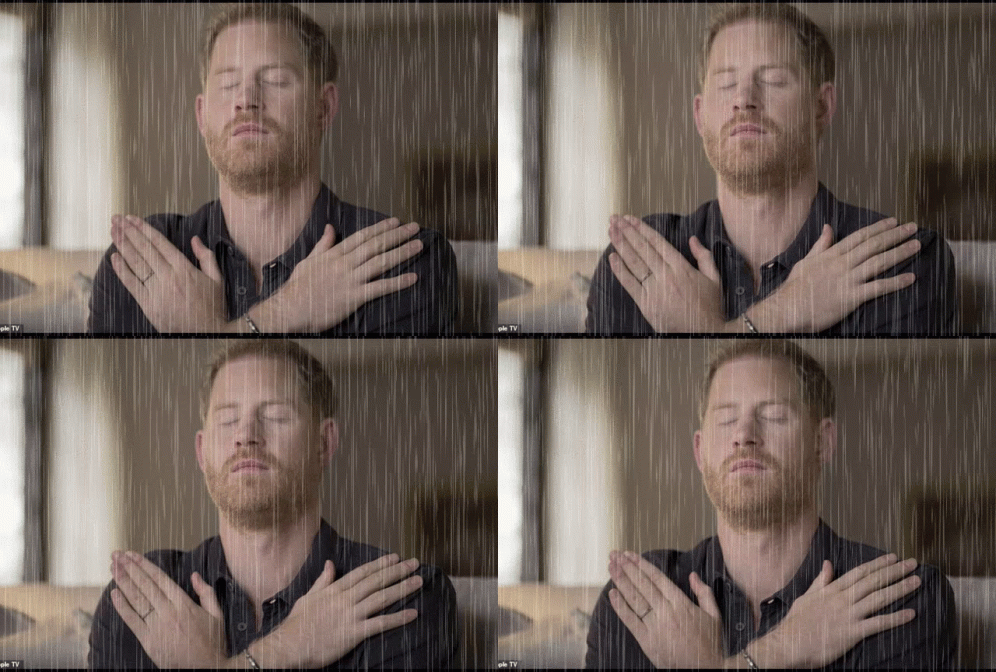
EMDR (Eye Movement Desensitization and Reprocessing) is a specialized form of psychotherapy developed by Dr. Francine Shapiro in 1987. It was originally designed to help people process traumatic memories but is now used for a wide range of emotional difficulties.
What is EMDR?
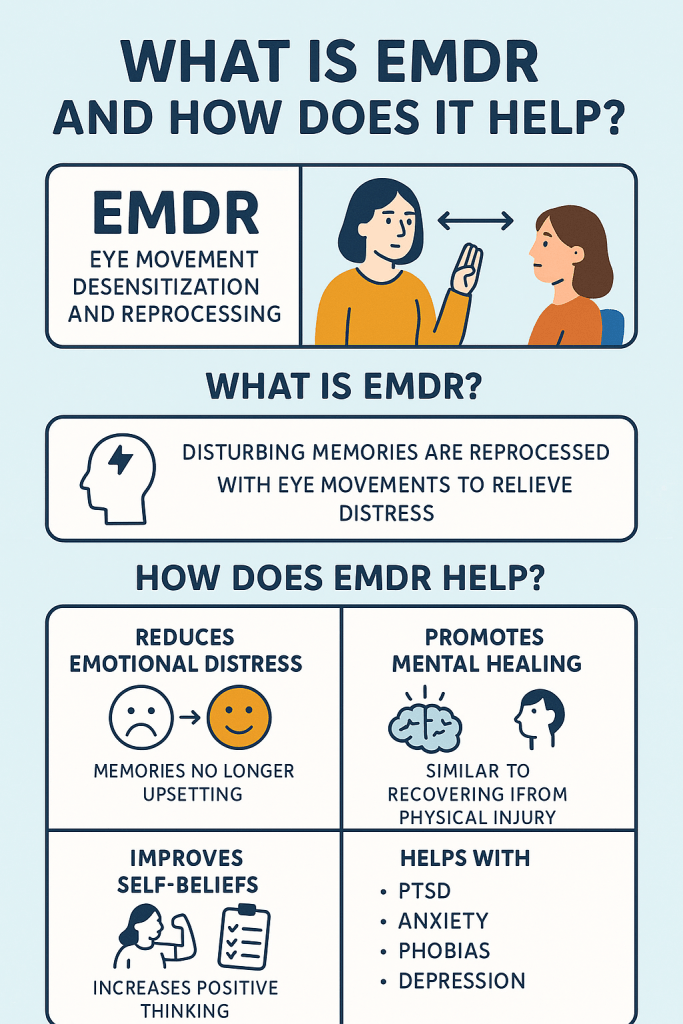
EMDR is based on the idea that traumatic memories sometimes get “stuck” in the brain and body, leading to distressing thoughts, feelings, and behaviors. In EMDR, a therapist guides the person to recall disturbing memories while simultaneously moving their eyes back and forth (or using other bilateral stimulation like tapping or sounds).
This process is thought to help the brain reprocess the memory correctly—so it no longer feels distressing when remembered.
How Does EMDR Help?
1. Reduces Emotional Distress
EMDR helps decrease the emotional intensity attached to painful memories.
A war veteran haunted by battlefield memories may, after EMDR, recall the event without panic or flashbacks.
2. Promotes Mental Healing
Like how the body heals physical wounds, EMDR allows the mind to heal from emotional injuries.
The brain reprocesses “stuck” memories, letting them be stored as ordinary memories.
3. Improves Self-Beliefs
Many people have negative beliefs because of past events (e.g., “I am worthless”). EMDR helps change these beliefs to healthier ones (“I am strong and capable”).
4. Helps with Various Problems
Besides PTSD, EMDR is also used for:
Anxiety
Panic attacks
Phobias
Depression
Grief
Low self-esteem
5. Faster than Traditional Talk Therapy
Some people experience significant relief in fewer sessions compared to regular therapy.
Meera’s Story:
Meera was in a car accident. Even after months, she couldn’t drive without fear and kept dreaming about the crash. After EMDR therapy, her fear reduced, her nightmares stopped, and she could drive comfortably again. Her mind had “reprocessed” the fear to make it manageable.
Is EMDR Safe?
Yes, EMDR is considered safe when done by a trained therapist. However, because it brings up painful memories, some people may feel emotional during sessions—which is part of the healing process.
Aspect Details
Full Form Eye Movement Desensitization and Reprocessing
Used For Trauma, anxiety, phobia, depression, grief
How It Works?
Reprocessing stuck memories through eye movements/tapping
Main Benefit
Reduces distress, builds healthy beliefs, speeds emotional healing
Sessions Required
6–12 typical for trauma (varies per case)
EMDR combined with homoeopathy provides healing for past traumatic and unpleasant experiences.
If you or your loved ones are facing PTSD or experiencing distressing memories, feel free to get in touch with us. We are happy to assist you on your path to healing.
Follow us on social media
Share this page on
Read our Latest Post
- Overthinking: The Mental Trap That Steals Peace – Why we do it, how it harms us, and what we can do to break free
- ADHD: Not a Lack of Discipline, but a Different Way of Being
- Signs That You Are Ruining Your Relationship – How to recognize harmful patterns before it’s too late
- Why Faithful People Cheat: The Quiet Cracks That Break Relationships—and How to Heal Them
- Why Women Blame Their Husbands for All Their Problems(And what is really going on beneath the surface)
Get in touch with us by filling the form below


Never shy from asking for help
When you face an issue ask for help. you are not the only one having problems. Everyone faces problems. Don’t need to be embarrassed about it. Ask for help from the people who can help you. Talk to your parents. elders, friends, relatives. or you can talk to us.
Website built with WordPress
 Dr. Alfred D'Silva
Leave a comment