
“Grief is love with nowhere to go. Grief counselling helps love find its voice again.”
Grief is one of life’s most painful and personal experiences. Whether it’s the death of a loved one, the end of a relationship, or even the loss of health or a job, grief can shake the very foundation of our being. For some, time slowly eases this pain. But for others, the weight feels impossible to bear alone. This is where grief counselling steps in—as a healing bridge between loss and life.
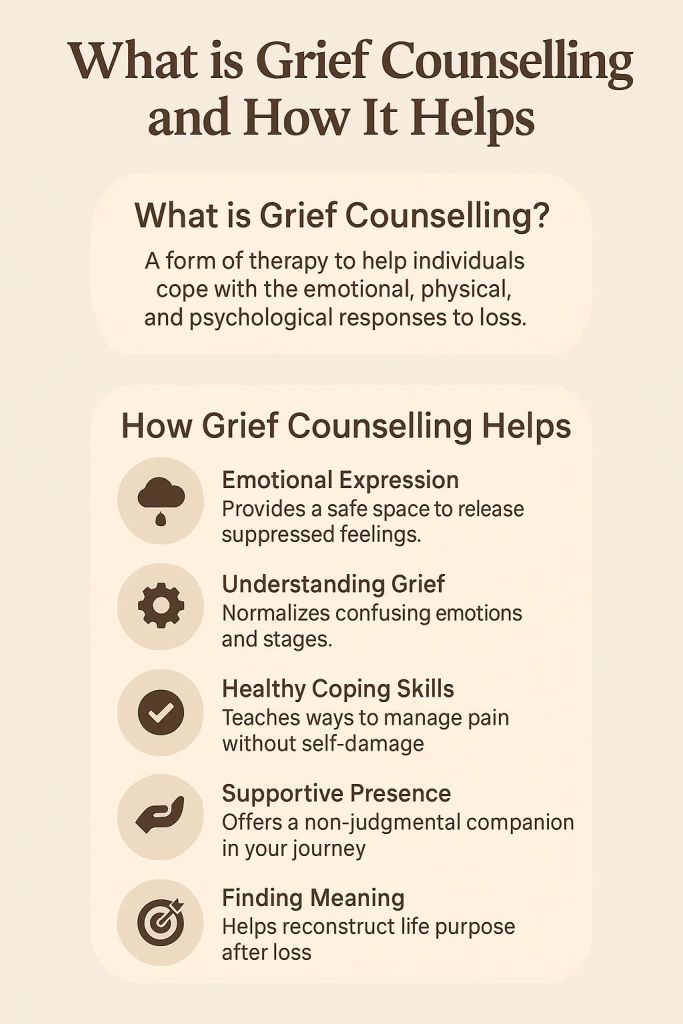
What is Grief Counselling?
Grief counselling is a form of therapy designed to help individuals cope with the emotional, physical, and psychological reactions that follow a significant loss. It provides a safe and understanding space to express sorrow, anger, confusion, guilt, or any complex emotion tied to the loss.
The goal of grief counselling is not to “move on” or “forget” but to integrate the loss into life in a healthy way, allowing the person to live meaningfully without being consumed by sadness or regret.
Why is Grief Counselling Important?
Grief is natural—but when it becomes overwhelming or prolonged, it can lead to depression, isolation, substance abuse, or physical illness.

Grief counselling can help prevent these complications by offering:
1. Emotional Release: Sometimes just having someone truly listen without judgment can be deeply healing. Grief counselling offers a space to cry, vent, rage, or simply sit in silence.
2. Understanding the Process of Grief: Many people are surprised by how chaotic grief feels—thinking they are “going crazy” because their emotions are unpredictable. Counselling educates people about the normal stages and forms of grief, such as denial, anger, bargaining, depression, and acceptance.
3. Building Coping Strategies: A grief counsellor helps you find personal ways to cope—whether through writing, rituals, mindfulness, spiritual practices, or social connection.
4. Addressing Complicated Grief: Sometimes grief becomes “complicated,” where the pain does not lessen over time or worsens. Counselling gently untangles these feelings and helps the person move forward.

The Healing of Anita
Anita lost her father to a sudden heart attack. In the months that followed, she couldn’t sleep, lost interest in work, and withdrew from friends and family. Every time she smiled, she felt guilty—as if being happy was a betrayal to her father’s memory.
When Anita began grief counselling, her first sessions were filled with tears and silence. Slowly, her counsellor helped her write letters to her father—expressing the things she never got to say. She also learned breathing exercises to reduce her anxiety and was encouraged to join a support group. Over time, Anita realised she could honour her father not by suffering, but by living fully—the way he would have wanted her to.
How Grief Counselling Helps – In Simple Terms
Benefits of Grief Counselling How It Helps
*Emotional Expression Provides a safe space to release suppressed feelings.
*Understanding Grief Normalises confusing emotions and stages.
*Healthy Coping Skills Teaches ways to manage pain without self-damage.
*Supportive Presence Offers a non-judgmental companion in your journey.
*Finding Meaning Helps reconstruct life purpose after loss.
Who Should Consider Grief Counselling?
*If you feel “stuck” in grief long after the loss.
*If your grief interferes with daily functioning (sleep, work, relationships).
*If you feel overwhelming guilt, anger, or depression.
*If you have thoughts of hopelessness or self-harm.
Grief Counselling is not a sign of weakness—it’s an act of courage.
Seeking grief counselling doesn’t mean you are “not strong enough” to deal with pain—it means you care enough about your well-being to heal the right way. Like tending to a wound to prevent infection, tending to grief with care prevents long-term emotional scars.
Remember: Healing is not about forgetting. It’s about remembering with peace.
Homoeopathy is extremely helpful in overcoming grief and depression. Homoeopathy will help you develop the inner strength to heal in a healthy way, so that you can get back to living your life.
Follow us on social media
Share this post on social media
Latest Post
- Overthinking: The Mental Trap That Steals Peace – Why we do it, how it harms us, and what we can do to break free
- ADHD: Not a Lack of Discipline, but a Different Way of Being
- Signs That You Are Ruining Your Relationship – How to recognize harmful patterns before it’s too late
- Why Faithful People Cheat: The Quiet Cracks That Break Relationships—and How to Heal Them
- Why Women Blame Their Husbands for All Their Problems(And what is really going on beneath the surface)
If you or a loved one is unable to overcome grief. Get in touch with us by filling the form below


Never shy from asking for help
When you face an issue ask for help. you are not the only one having problems. Everyone faces problems. Don’t need to be embarrassed about it. Ask for help from the people who can help you. Talk to your parents. elders, friends, relatives. or you can talk to us.
Website built with WordPress
 Dr. Alfred D'Silva
Leave a comment