
Stress is an inevitable part of life. While it’s a natural response to challenges or threats, chronic stress can take a toll on our physical, mental, and emotional well-being. Understanding the types of stress and learning how to manage them effectively is crucial for leading a balanced life.
What is Stress?
Stress is the body’s response to any demand or pressure. When we perceive a situation as threatening or challenging, our body releases hormones like cortisol and adrenaline, preparing us to respond (the “fight-or-flight” response). This response can be helpful in short bursts, but prolonged activation can lead to health problems.
Types of Stress
Stress comes in various forms, each with its own causes and effects. Broadly, we can categorize stress into the following types:
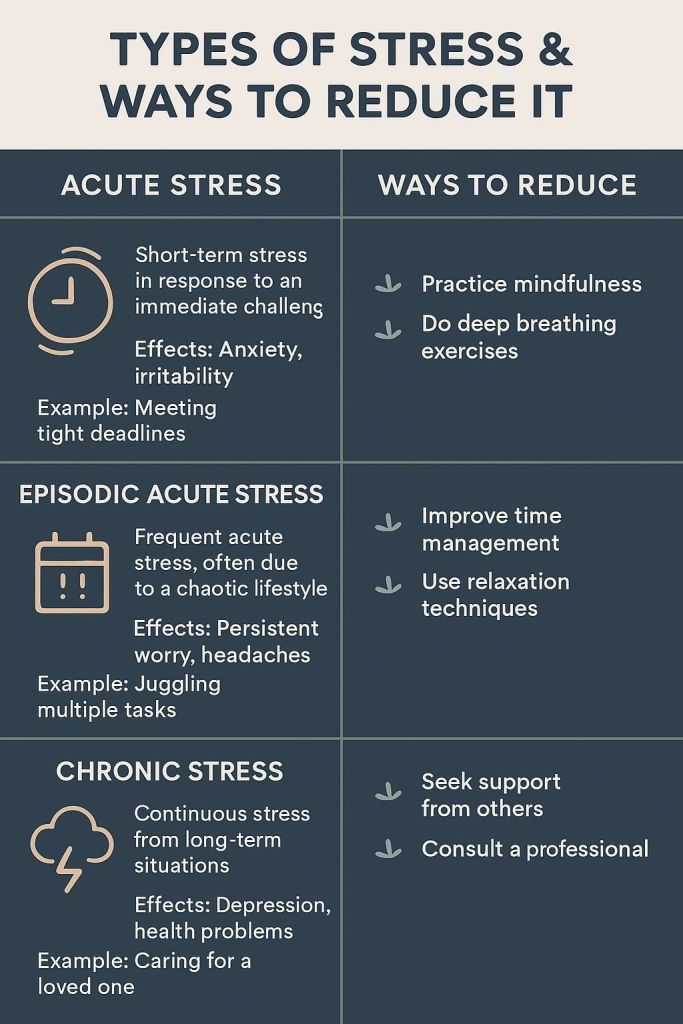
1. Acute Stress
Definition: Short-term stress from specific events (e.g., an exam, a job interview).
Effects: Can be motivating, but may cause anxiety or physical symptoms.
Example: A student feeling anxious before an exam.
2. Episodic Acute Stress
Definition: Frequent episodes of acute stress due to a hectic lifestyle.
Effects: Irritability, poor concentration, persistent worry.
Example: A manager constantly juggling deadlines.
3. Chronic Stress
Definition: Ongoing stress from long-term problems (e.g., financial issues, relationship problems).
Effects: Depression, heart disease, weakened immunity.
Example: A caregiver for a chronically ill loved one.
4. Eustress
Definition: Positive stress that enhances motivation and performance.
Effects: Boosts confidence and productivity.
Example: Preparing for a sports competition.
How to Reduce Stress: Practical Strategies
Managing stress means learning to respond healthily, not eliminating it entirely. Here are several evidence-based strategies:
1. Practice Mindfulness and Relaxation
Try meditation, deep breathing, or progressive muscle relaxation.
Shilpa, a busy mom, used 10-minute mindfulness sessions to stay calm during her day.
2. Exercise Regularly
Physical activity boosts endorphins and relieves tension.
Rehan found walking at lunchtime reduced his stress.
3. Set Boundaries and Prioritize
Say no when necessary and focus on key tasks.
Priya created a simple daily to-do list to avoid overwhelm.
4. Maintain a Healthy Lifestyle
Get enough sleep, eat balanced meals, limit caffeine and alcohol.
Manish improved his sleep and diet, feeling more energized.
5. Seek Support
Talk to friends, family, or professionals.
Sarah found relief in a caregiver support group.
6. Engage in Hobbies and Fun Activities
Find joy in leisure activities and hobbies.
Mark rediscovered painting as a stress-relieving hobby.
✅ Stress Reduction Checklist
Here’s a simple checklist to help you manage stress daily:
✔ Practice deep breathing for 5-10 minutes.
✔ Engage in 30 minutes of physical activity.
✔ Prioritize tasks with a simple list.
✔ Take a digital detox (no screens for 1 hour).
✔ Eat balanced meals and stay hydrated.
✔ Get 7-9 hours of quality sleep.
✔ Connect with a friend or loved one.
✔ Spend time on a hobby or relaxing activity.
Stress is universal, but it doesn’t have to control your life. By understanding its types and adopting healthy coping strategies, you can build resilience and live more fully. Remember, even small daily actions can make a big difference!
Homoeopathy and Stress Counselling is very helpful to combat stress and reduce its impact.
Share this post on social media
Follow us on social media for updates
Read our latest blogs
- Overthinking: The Mental Trap That Steals Peace – Why we do it, how it harms us, and what we can do to break free
- ADHD: Not a Lack of Discipline, but a Different Way of Being
- Signs That You Are Ruining Your Relationship – How to recognize harmful patterns before it’s too late
- Why Faithful People Cheat: The Quiet Cracks That Break Relationships—and How to Heal Them
- Why Women Blame Their Husbands for All Their Problems(And what is really going on beneath the surface)
If you or a loved one is under a lot of stress. Feel free to talk to us by filling the form below


 Dr. Alfred D'Silva
Leave a comment