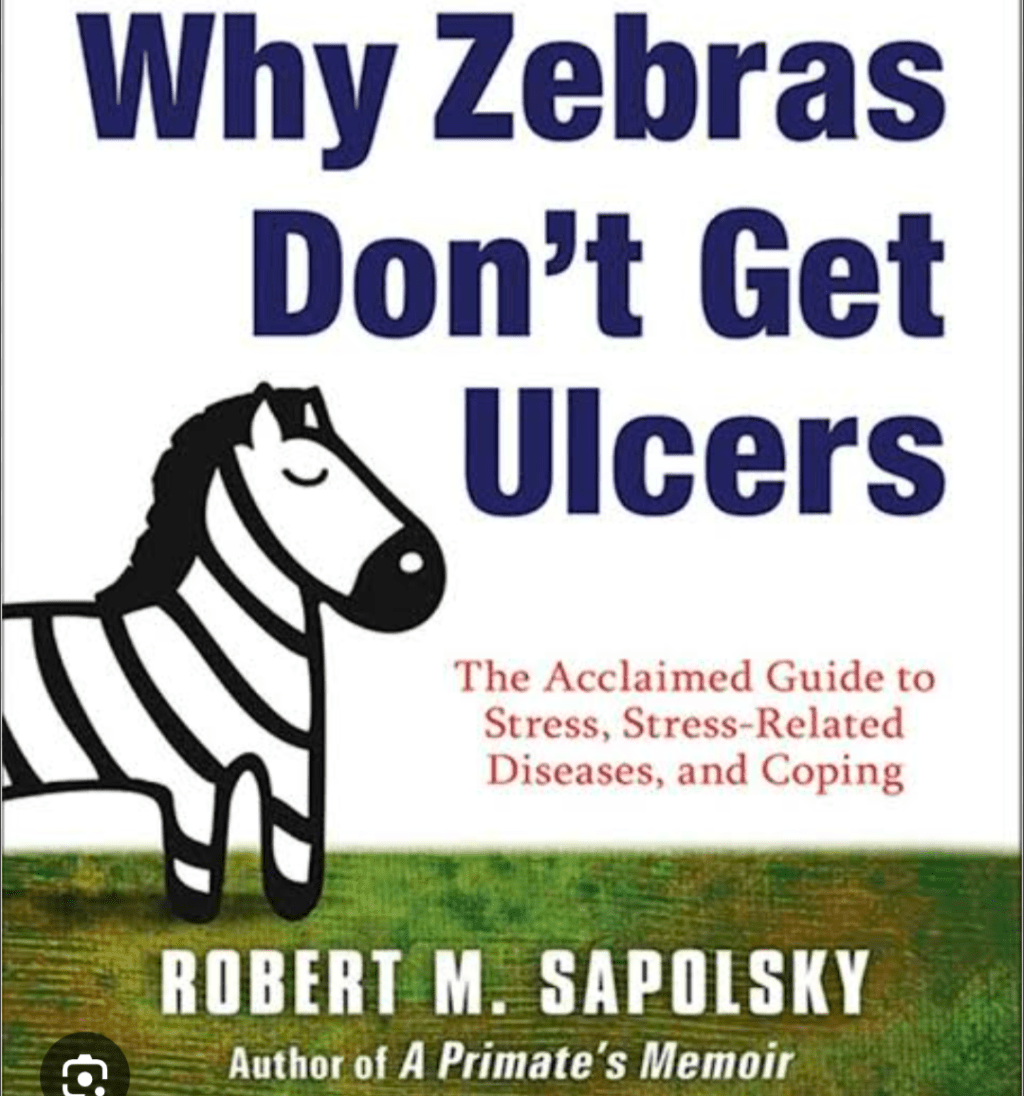
Robert Sapolsky’s Why Zebras Don’t Get Ulcers is an insightful and engaging exploration of the science of stress, its biological effects, and how humans can better manage it. The book’s central premise is that while stress is an essential survival mechanism, chronic stress—common in modern human life—can be extremely damaging to our health.
1. The Evolutionary Perspective on Stress
Sapolsky begins by comparing how humans and animals experience stress. Zebras, for example, only activate their stress response when facing immediate danger, such as escaping a predator. Once the threat is gone, they return to a relaxed state. In contrast, humans activate the same stress response for non-life-threatening issues—job pressures, financial worries, relationship conflicts, and even imagined fears. This chronic activation of the stress response leads to long-term health problems.
2. The Physiology of Stress
The book explains the biological mechanics of stress, focusing on the role of the hypothalamic-pituitary-adrenal (HPA) axis and the release of stress hormones like cortisol and adrenaline. These hormones prepare the body for a “fight-or-flight” response by increasing heart rate, blood pressure, and glucose levels, while suppressing non-essential functions like digestion and reproduction.
However, when stress is prolonged:
The immune system becomes compromised, increasing susceptibility to illnesses.
Cardiovascular health deteriorates, leading to hypertension and heart disease.
The digestive system suffers, contributing to conditions like irritable bowel syndrome and ulcers (though not caused directly by stress, stress can exacerbate them).
Cognitive functions, including memory and decision-making, decline due to damage in brain structures like the hippocampus.
3. How Stress Affects Different Systems
Sapolsky systematically explains how stress impacts various bodily systems:
The Brain: Chronic stress can shrink areas like the hippocampus (responsible for memory) and increase activity in the amygdala (responsible for fear and anxiety).
The Heart and Circulatory System: Chronic stress contributes to high blood pressure, atherosclerosis, and increased risk of heart attacks.
The Immune System: Short-term stress can temporarily boost immunity, but long-term stress suppresses immune function, making individuals more vulnerable to infections and diseases.
The Digestive System: Stress can slow digestion and exacerbate conditions like ulcers, though Sapolsky clarifies that ulcers are primarily caused by Helicobacter pylori bacteria, with stress acting as a secondary aggravator.
Reproductive Health: Chronic stress can lead to fertility issues, irregular menstrual cycles in women, and reduced sperm count in men.
4. Individual Differences in Stress Response
Not everyone experiences stress in the same way. Sapolsky explores why some people are more resilient, discussing factors such as:
Personality traits: Optimistic, socially connected, and emotionally flexible individuals tend to handle stress better.
Early life experiences: Childhood stress and trauma can shape long-term stress responses.
Social support: Strong social networks can buffer stress, while loneliness exacerbates it.
5. Managing and Reducing Stress
While stress is unavoidable, Sapolsky offers strategies for mitigating its harmful effects:
Exercise: Regular physical activity helps regulate stress hormones and improve mood.
Social Connections: Building strong relationships provides emotional support and reduces stress responses.
Mindfulness and Relaxation Techniques: Practices like meditation, breathing exercises, and yoga can lower stress levels.
Cognitive Behavioral Techniques: Changing negative thought patterns can help reframe stressors in a more manageable way.
Final Thoughts
Why Zebras Don’t Get Ulcers is a thought-provoking and humorous look at stress, blending neuroscience, psychology, and evolutionary biology. It provides a scientific understanding of why stress is such a major health concern today and offers actionable insights into how we can reduce its negative effects. Whether you’re interested in health, psychology, or simply looking for ways to manage stress better, this book is an enlightening and engaging read.
Share on your favorite social media
Connect with us on social media
Latest Blogs
- Overthinking: The Mental Trap That Steals Peace – Why we do it, how it harms us, and what we can do to break free
- ADHD: Not a Lack of Discipline, but a Different Way of Being
- Signs That You Are Ruining Your Relationship – How to recognize harmful patterns before it’s too late
- Why Faithful People Cheat: The Quiet Cracks That Break Relationships—and How to Heal Them
- Why Women Blame Their Husbands for All Their Problems(And what is really going on beneath the surface)
Fill the form to get in touch with us


 Dr. Alfred D'Silva
Leave a comment